<img src='https://news.cgtn.com/news/2025-09-15/China-Poland-vow-to-further-strengthen-and-expand-bilateral-exchanges-1GH14XKZOFO/img/9744dd6d86c94f40984571e16ec5041f/9744dd6d86c94f40984571e16ec5041f.jpeg' alt='National flags of China (R) and Poland'
The fourth meeting of Poland-China Intergovernmental Committee was held in Warsaw, co-chaired by Chinese Foreign Minister Wang Yi and Polish Deputy Prime Minister and Foreign Minister Radoslaw Sikorski on Monday.
The ministers had a comprehensive and in-depth exchange of views on the current state of bilateral relations, as well as international and regional issues of mutual interest.
Recalling last year’s 75th anniversary of the establishment of diplomatic relations between the two countries, both parties agreed that it should serve as a driving force for further development of bilateral cooperation within the framework of Comprehensive Strategic Partnership Between the People’s Republic of China and the Republic of Poland.
They agreed that there is a need to further strengthen and expand bilateral exchanges and effective cooperation, and to organize regular Intergovernmental Committee meetings.
Both sides acknowledged the 50th anniversary of the establishment of diplomatic relations between the European Union and the People’s Republic of China and recognized it as a significant reference for China’s bilateral relations with EU Member States and as a platform for addressing common political and economic challenges.
The two parties reaffirmed their support for an international order based on fundamental principles of international law, including the UN Charter at its core. They reiterated their readiness to continue effective cooperation at major multilateral forums, such as the UN, ASEM (Asia-Europe Meeting), and the World Trade Organization.
In the world of rock’n’roll, reunion tours are typically driven by one of two things: contractual obligation or the desire to make some serious coin. In the case of Spinal Tap, both were at play.
“The four of us had 40 per cent of the profits and we never got a penny,” says writer-director Rob Reiner of This Is Spinal Tap, the legendary 1984 fictional rock documentary he created with co-writers and stars Christopher Guest (lead guitarist Nigel Tufnel), Michael McKean (singer-songwriter-guitarist David St Hubbins) and Harry Shearer (bassist Derek Smalls), in which they played an English heavy-rock band. Reiner played the earnest filmmaker charting their disastrous tour of North America.
“I’m not exaggerating,” Reiner continues. “It’s gonna sound ridiculous but we got 82 cents apiece.”
Surely he can’t be serious. This is, after all, a movie that helped shape the mockumentary genre, spawned catchphrases and memes galore, generated real-world concert tours and albums, and has been on constant rotation one way or another for decades, earning a legion of actual rock-star fans along the way.
The band in their heyday in This Is Spinal Tap.Credit:
“I’m serious. I’m serious,” he blusters. “It sounds ridiculous. We’re talking about video cassettes and DVDs and Blu-ray and every damn thing.”
Shearer – who is best known for voicing multiple characters in The Simpsons (Mr Burns, Smithers and Principal Skinner among them) – was so incensed by the injustice of it all that in 2016 he launched legal action to try to get a better deal. He won, and in 2018 the rights to This Is Spinal Tap reverted to the four creators.
“And once we had the rights back we said, ‘Well, what do we do with this?’” says Reiner.
A sequel was the obvious answer, mostly because people had been asking for one for years. But initially the fab four resisted, “because we were done”.
Fair enough, too – they’d been doing it a long time. Finally they relented, and so we have Spinal Tap II: The End Continues, as well as a companion book, written by Reiner, called A Fine Line Between Stupid and Clever (the title, he says, “is my favourite line from the [original] movie”).
It’s been quite the journey. The first seed of Spinal Tap was sown in 1979, when a proto version of the band appeared on Reiner’s sketch program The TV Show. The characters didn’t yet have names but their keyboard player did: it was Loudon Wainwright III, who had a huge hit in 1972 with the novelty song Dead Skunk in the Middle of the Road but is best known these days as the father of musical siblings Rufus and Martha.
Guest, McKean and Shearer all play and sing. But before they started work on the mockumentary in 1983, Reiner reveals in the book, they considered fleshing out the band with some heavyweight pros. “We actually had meetings with Paul Stanley of Kiss and John Densmore of The Doors,” he writes. “But ultimately we decided that known musicians would alter the parallel rock universe we had created for Tap.”
Though it was a film made by comedians (albeit comedians who could actually play), This Is Spinal Tap resonated with musicians because it took seriously the tropes it was mocking – of both rock and documentary.
“I studied as many rock’n’roll documentaries as I could at the time,” says Reiner. “There are way more now, and there’s some great ones, but at that time there was Bob Dylan in Don’t Look Back, there was The Song Remains the Same, which was Led Zeppelin, and The Kids Are Alright, which was The Who.”
The gang of four were, he says, “trying to make fun of the way they did those things” – and especially of the self-seriousness that infused the likes of Zeppelin. But it was Martin Scorsese’s The Last Waltz, about The Band, that proved the key influence.
Filmmaker Marty DiBergi (Reiner) interviews Nigel Tufnel (Guest) in his cheese (and guitar) shop in Spinal Tap II: The End Continues.Credit: AP
“I’d never seen a documentarian put himself in the documentary,” says Reiner. “So that gave birth to Marty DiBergi, the character I play in the film.”
As he tells me this I’m struck by the fact I had never before clocked the DiBergi-Scorsese connection. Then again, when I first saw This Is Spinal Tap I was about 15 minutes in before I twigged that maybe it wasn’t a genuine documentary about the most ridiculous band that has ever existed, so maybe I’m just a bit slow. But many others have seen plenty of truth in that parody, too.
“The brilliant insights from Tap have become part of our culture – certainly part of musical culture,” writes David Byrne in the foreword to Smell the Tap, the flip-it-over section of Reiner’s book in which Marty DiBergi interviews the band (in character). “How many of us on the road have said, ‘These go to 11’, or, ‘Hello, Cleveland!’ while lost in the bowels of some dank venue basement. Like in a Borges (or Philip K. Dick) story, we wonder if the Gallagher brothers are reading from a script written by Tap.”
There is method to the Tap madness. But it exists purely in the moment.
“All the dialogue is improvised,” says Reiner. “We have ideas for scenes and we’ll put the scene up on a bulletin board, see how it works, if it’s a good idea, and we try to shape it in some way. But all the dialogue is improvised. People have a hard time understanding that.”
Shooting a film that way means turning the camera on and capturing what you can. For the first movie they recorded about 100 hours of footage, which was ultimately whittled down into a lean, 82-minute feature.
Spinal Tap, from left: Derek Smalls (Harry Shearer), Nigel Tufnel (Christopher Guest) and David St Hubbins (Michael McKean).Credit:
Filmmakers will often tell you that movies are really made in the edit suite. But in the case of a mockumentary from this crew (and Guest’s own films, including Waiting for Guffman, Best in Show and the folk-music-themed A Mighty Wind) that’s especially so.
“You wind up basically writing with the pieces of film,” says Reiner. “You generally know what the shape of it should be but scenes that you thought were going to work don’t work, other scenes that you didn’t think were going to work do work, and you move things around. And then you ultimately shape something into what you wind up with.
“I found something very interesting with the first film we did. If you can get the dialogue to where it makes sense, you can put almost any visual to it. The audience will be tripped up if they hear inconsistencies in the dialogue much more than if they see mismatches in the visuals. So you’re essentially creating a script in the cutting room.”
Making this belated sequel, the approach remained the same. But getting to the point where all four felt they could and should do it? Well, that had them on shakier ground. After all, why risk tarnishing the reputation of the first film?
“We really resisted the idea for the longest time because we felt it was a high bar,” says Reiner. “I mean, the film was in the Library of Congress, it’s been put in the National Film Registry, and ‘this goes to 11’ is in the Oxford English Dictionary. We said, ‘That’s it, we don’t want to touch this thing’.”
The phrase ‘it goes all the way to 11’, from This Is Spinal Tap, has entered the language.Credit:
Spinal Tap, the band, had a life beyond the first movie, of course – touring, recording and releasing albums, even playing at Glastonbury in front of more than 100,000 people. They were a joke that people took seriously – or seriously enough.
But by the time they sat down to talk about what it meant to have won back the rights to the first film, it had been 15 years since Shearer, Guest and McKean had played together.
“So we said, ‘Wait a minute, why is that? Is there bad blood?’” Reiner says. “And that became the basis of the film.”
Like so much else in the Tap story, it was a case of reality informing fiction. Time will tell if that fiction goes on to inform reality again but you wouldn’t bet against it.
“It came out of a very natural place,” Reiner says of the sequel. “We wouldn’t have done it unless we thought this film could stand on its own.”
An audience with Spinal Tap
In the 40 years between the release of This Is Spinal Tap and the making of its sequel, the fictional band has collected some very real, and very high-profile, musician fans. And two of them were tapped (ahem) for The End Continues: Paul McCartney and Elton John (Sirs both).
The former wanders into a recording studio in New Orleans while the band is trying out a new number, and offers some suggestions about how to improve the song. Needless to say, David St Hubbins is none too impressed.
McCartney joins the band in the studio, and eventually on stage, for a rendition of Cups and Cakes, the B-side to (Listen to) The Flower People, the band’s debut single, recorded in 1967 during a brief flirtation with psychedelia. Their scenes are priceless, and way more than cameos.
But when I ask St Hubbins about the McCartney incident, he bristles.
Paul McCartney paid a visit to the recording studio but not everyone was impressed.Credit: AP
“I’m really tired of talking about this, really,” he says. “It was not a match made in heaven, put it that way.”
“He was a man, not a match,” says Smalls.
“I know that,” says St Hubbins, tetchily. “But I’d just like to move on from it. We had a few disagreements. But you know what? He did do a lovely version of Cups and Cakes and he’s recorded it for us. All is forgiven.”
There was, it turns out, quite a lot to forgive. Bad blood is why Tap had not played live together for 15 years. Contractual obligation – the daughter of their late former manager inherited a signed note that required them to play one last show – is why they finally came together for a single concert in New Orleans, as recorded by DiBergi in The End Continues.
“It’s been a mixed bag, really,” St Hubbins says of the reunion. “I mean, we had a lot of fun, and we had a few hiccups along the way, some personality problems, but we’ve worked everything out, pretty much, except for the lawsuits.”
“It wasn’t our choice to do this in the first place,” adds Smalls. “It was foisted, or forced-ed, upon us.”
“But once we got together, you know, we sort of rolled on because we’ve done this so much,” says Tufnel. “You get the groove, you have a little bicker and then you go and have a little bicky as well.”
“And you wear these little things these days, these in-ear monitors,” says Smalls. “It really helps because you can turn it up so that you’re only hearing what you’re playing and you can ignore the other people.”
“If there’s ever a squabble between two members of the group, and I’m not one of them, I just crank it down and I go into a world of my own,” adds St Hubbins.
They’ve each been in a world of their own for the past 15 years: St Hubbins composing soundtrack and on-hold music, Smalls running a glue museum, and Tufnel as proprietor, with his partner Moira, of a cheese (and guitar) shop.
They’re getting on now, the Tapsters. So I ask Nigel, given a choice between a career on the road or a career in cheese, which do you find more satisfying?
“I don’t think you have to choose, really,” he says. “I mean, we came down to New Orleans to do the show and then I went back to the cheese shop with Moira. And if we were to do another gig – and there are rumours that we might – then, you know, she’ll handle the cheese shop while I do the gig.
The cover of Rob Reiner’s book A Fine Line Between Stupid and Clever.Credit: Simon and Schuster
“I love both of them. They’re very different things, obviously. The road doesn’t smell the same as the cheese shop.”
“Sometimes it does,” says St Hubbins.
“The buses smell like that occasionally,” Tufnel agrees.
“Especially when the drummer doesn’t remember, ‘you’re not supposed to do that’,” St Hubbins says. “At 3.30 in the morning the atmosphere is thick.”
“There’s a big sign [on the tour bus] that says, ‘No poo please’,” Tufnel helpfully elaborates. “And for the drummer it’s as if it said, ‘Please poo’.”
“It’s as if the sign said, ‘Do not read sign’,” says St Hubbins.
“But if you go into a cheese shop, you’d know what to expect,” Tufnel says, coming full wheel, as it were. “A Stilton, a cheddar, Edam, whatever.”
“Maybe the drummer thought he was in a hotel,” observes Smalls.
“A moving hotel?” Tufnel asks.
“Yeah. The Stilton.”
Loading
Spinal Tap II: The End Continues is in cinemas from September 25. A Fine Line Between Stupid and Clever, $36.99, Simon & Schuster, is out now.
Maharashtra Deputy Chief Minister Ekanth Shinde has dismissed Congress leader Rahul Gandhi`s fresh allegations of irregularities in the voters` list as “completely baseless” and challenged him to submit a formal affidavit to the Election Commission (EC), reported news agency PTI.
Gandhi on Thursday accused Chief Election Commissioner Gyanesh Kumar of protecting those who “destroyed democracy” and cited data from a Karnataka assembly constituency to claim that votes of Congress supporters were being systematically deleted ahead of elections, reported PTI.
The Election Commission, however, had dubbed the allegations “incorrect and baseless” and said, “No deletion of any vote can be done online by any member of the public, as misconceived by Gandhi,” reported PTI.
His claims have triggered a war of words between the ruling and Opposition parties, with the latter demanding Chief Minister Devendra Fadnavis` resignation.
Talking to reporters in Thane late on Thursday night, Shinde asserted that the election process in Maharashtra, as well as in Karnataka, Telangana, and Punjab, had been entirely transparent.
The Lok Sabha Leader of Opposition`s allegations of voter manipulation were unfounded, he said, pointing out that Congress had won in the Aland constituency in Karnataka under the same election system that Gandhi now questioned.
“How can one accuse of vote theft in a constituency where the Congress party itself has emerged victorious?” Shinde asked.
“If Rahul Gandhi has doubts about the election process, he should submit an affidavit to the Election Commission and follow proper legal procedures. Only then should he make such grave allegations,” he said, reported PTI.
Gandhi has cited details of alleged attempts to delete 6,018 votes in Karnataka`s Aland constituency in the run-up to the 2023 assembly polls.
He also gave the example of Maharashtra`s Rajura constituency, where he claimed 6,850 voters were added in a “fraudulent” manner using automated software.
Shinde called the accusations “completely baseless”, saying the process to remove a voter`s name from the list was rigorous and could not be done hastily or arbitrarily.
He further claimed that the Congress MP`s criticisms were part of a pattern.
“Whenever he loses an election, Rahul Gandhi raises doubts about the integrity of the election process, questioning the credibility of EVM machines, voter lists, and even the Election Commission,” Shinde said, reported PTI.
It was during the Congress-led UPA government, under Prime Minister Manmohan Singh, that EVMs were first introduced to conduct elections, he said.
“So, to claim that the system is flawed now, simply because the Congress has lost, is unfair,” he said, reported PTI.
He said that the people of Maharashtra have given their unprecedented support to the Mahayuti alliance, comprising the BJP, NCP and Shiv Sena, recognising the work done by the government and the welfare schemes implemented in the last three years, reported PTI.
“To undermine this people`s mandate and make unsubstantiated allegations is an attempt to disrespect the public`s choice,” he said, reported PTI.
Taking a jibe at Gandhi, Shinde said the Congress leader had intended to “drop a hydrogen bomb” during his press conference but had forgotten to do so.
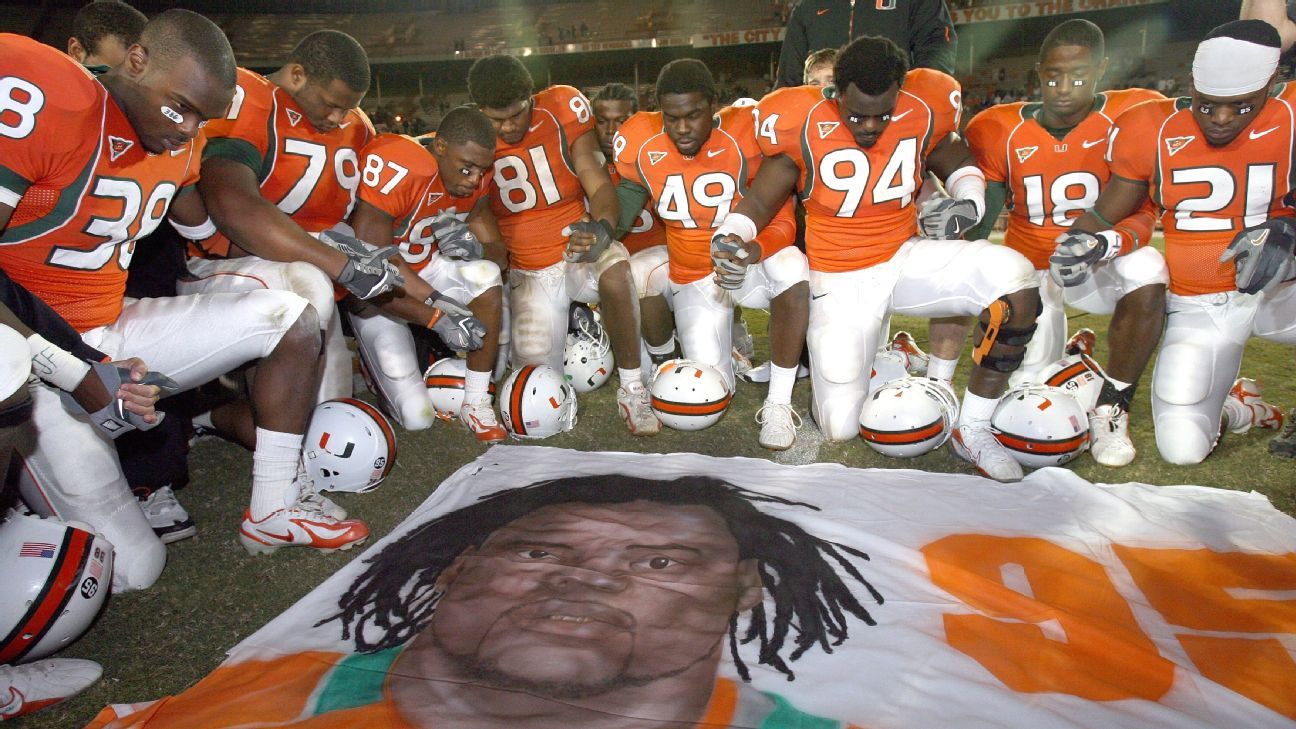
Florida prosecutors have repeatedly told a court that a key witness in their murder case against a former Miami Hurricanes football player accused in the 2006 killing of teammate Bryan Pata was dead.
However, with the long-delayed murder trial of Rashaun Jones only weeks from its scheduled start in Miami, ESPN reporters knocked on an apartment door in Louisville, Kentucky, recently and found the witness, Paul Conner, alive.
Conner told ESPN that he wasn’t aware anyone from Miami was looking for him and said he rarely leaves his apartment.
Prosecutors told Florida 11th Circuit Court Judge Cristina Miranda as recently as July that Conner was dead. A spokesperson for the state attorney’s office, Ed Griffith, told ESPN on Thursday that police relied on a public database that “seemed to indicate” Conner was deceased and that police asked officers in Louisville to knock on Conner’s door. He offered no documents of such a visit nor details of when an officer visited or what happened.
Griffith also pressed a reporter for the address ESPN visited — the same address that was listed on the database report Griffith cited. The lead detective in the case, Juan Segovia, also texted an ESPN reporter asking for Conner’s contact information.
It’s unclear how the revelation about Conner will affect the trial, currently set to start Oct. 6. “Is there an impact of that on the case? I would have to say yes, potentially,” Griffith said.
Jones’ attorney, Sara Alvarez, said ESPN’s finding raises further questions about the state’s case.
“I’m not shocked, but appalled,” she said by telephone Thursday. “This is a bigger issue. This is just blatant lies. Bald-faced lies.
“It’s a shame and it’s disgusting that you would be willing to send a man to prison for the rest of his life without any evidence and then not be honest about what evidence exists and doesn’t exist.”
In a conversation with an ESPN reporter and in questioning by police, Jones has said he did not kill Pata. He has pleaded not guilty.
Conner, a retired University of Miami writing instructor, once lived in the apartment complex where Pata, a likely high draft pick in the 2007 NFL draft, was shot once in the head in November 2006.
Conner contacted police soon after the shooting, saying he heard a “pop” and saw someone “jogging” away from the parking lot entrance near where Pata was shot. Conner picked Jones out of a photo lineup.
Some 13 years later, Conner was reinterviewed in 2020 and again picked Jones out of a lineup, according to Jones’ arrest warrant. And Conner recounted what he saw at a 2022 bond hearing and in a 2023 deposition with attorneys.
Conner, now 81, told ESPN in his Aug. 25 interview that he now doesn’t recall what happened in Miami, and he seemed unfamiliar with his prior statements.
“I’m getting up in years,” he said. “My memory comes and goes. How long ago was this court case?”
With Jones’ trial date looming, Miami assistant state attorney Cristina Diamond told Miranda in a July 17 hearing that officials believed Conner to be dead after multiple failed attempts to contact him and a third-party commercial database indicating he was deceased. Miranda accepted the efforts to find Conner and ruled to allow his prior testimony from the hearing and deposition to be used at trial. Jones’ attorneys had initially objected on grounds of their inability to cross-examine his statements but conceded to accept the state’s evidence during that hearing.
ESPN’s interview with Conner was actually the second confirmation that he was alive. After a reporter contacted Conner’s last known employer, a former colleague asked Louisville police to conduct a welfare check. On July 22, Conner answered and confirmed his identity, according to police bodycam images reviewed by ESPN.
The Miami-Dade Police Department’s inability to find Conner is the latest in a long string of official missteps that have dramatically prolonged the case and frustrated Pata’s still-grieving family. According to information obtained by ESPN through a lawsuit against Miami-Dade Police and other interviews and records, Jones was among the first suspects considered by police, but they didn’t arrest him until 2021, nine months after ESPN first published its findings. Jones, now 40, has remained in custody for the past four years amid court delays and changes in attorneys on both sides.
In March 2022, Miranda agreed to grant Jones an $850,000 bail and allow him out, pending trial; however, Jones has not paid the amount — typically 10%, or $85,000 — needed for release, sources told ESPN.
That bond hearing included in-person testimony from Conner. Police had no eyewitness to the shooting, so Conner was a key element to a case that relies heavily on testimony from friends and teammates that Jones and Pata fought verbally and physically before the killing and that Jones possessed a gun similar to the one likely used to kill Pata (although police never recovered the weapon).
Conner told the court he was walking to the Colony Apartment Complex, where he and Pata lived, just before 7 p.m. on Nov. 7, 2006. He was near the parking lot entrance when he heard a “loud bang.” About 15 to 20 seconds later, Conner testified, he came “face-to-face” with a man walking at a brisk pace. “He smiled at me. He had a clean set of white teeth,” Conner said. “I described him to the forensic artist.”
On the photo lineup from which Conner picked out Jones’ photo, Conner had put his signature, date and the phrase “90 percent,” and a defense attorney asked him what that meant.
“One of the detectives asked me, how sure I was that that was the defendant. And I answered 90%,” he said.
The attorney later asks, “So, if I understand you correctly, there is a 10% error in your calculation of whether or not this person is the person that you saw on that night?” to which Conner responds, “It could have been.”
The defense attorney also noted that when Conner, several years later, picked Jones out of a lineup, Jones’ picture was in the same location on a page as the first time — the top middle photo.
In building their case against Jones, prosecutors also have cited Jones’ actions that night, including his failure to attend a mandatory team meeting called after the shooting and efforts to borrow money to leave the area. They also cite cell phone records they say contradict where Jones told officers he had been.
According to a state motion filed July 8 to request the use of Conner’s prior testimony, Det. Segovia said he had been in touch with the FBI and local police in Ohio, where Conner last worked at the University of Toledo. Segovia said he learned that Conner had moved to Kentucky.
Segovia then reached out to the Louisville Police Department, and according to the motion, “contact was made with the leasing office of that address, and they indicated that Mr. Conner did not live there.” Records show prosecutors were planning to subpoena a homicide detective from Louisville. No such officer has testified in the case.
ESPN requested records from the Louisville Police Department and connected with a spokesperson multiple times to inquire about any efforts made to locate Conner and any efforts by the officer who had been subpoenaed to testify. The spokesperson there said there were no records of any officer going to Conner’s address until the welfare check requested by the university colleague and ESPN’s inquiries. Conner said he has lived at his Louisville address for about a couple of years. A family member said they knew of no reason the leasing office would say Conner didn’t live there. A call to the leasing office was not returned.
ESPN made multiple requests to police and the Miami-Dade State Attorney for records of their efforts to find Conner. After initially claiming they had no documents, they eventually provided an email exchange in which Segovia wrote that he left 15 voicemail messages with Conner since May. Segovia added that he also sent emails to an address that officers had used with him previously. They also provided a copy of a June 6 letter addressed to Conner at his Louisville address that asked him to contact their office.
During ESPN’s visit, Conner allowed a reporter to review his phone. There were dozens of unanswered calls, and he appeared unfamiliar with how to check his voicemail. Several calls came from Miami-area phone numbers, including at least one that matched a phone number for Segovia. At a prior hearing, prosecutors said they had been aware Conner struggled with “technology” and had been difficult to reach.
Miami-Dade officials and the judge did not have a death certificate, mortuary record, obituary or any other official record of death, but instead relied on a commercial third-party information provider. Such companies often provide factual background information, but their terms of use disclose that information might contain errors, and they do not guarantee accuracy.
Conner’s cousin Steve Fahey, who said he was familiar with Conner’s prior role in the case, said he sees Conner frequently. He told ESPN in a phone interview that Conner has struggled lately with memory issues. He said Conner never mentioned anyone from Miami trying to reach him, and Fahey said no one from Miami tried to contact him, either.
Miami-Dade officials noted they spoke to a “distant cousin” of Conner’s who they said was unaware of Conner’s whereabouts, but they did not name the individual.
Alvarez, Jones’ attorney, said she should be able to question Conner in front of a jury about what she said were contradictions in details he gave police at various times. Whether Conner testifies, Alvarez said she plans to question Segovia about what she calls lies and misrepresentations of evidence.
Among other issues affecting the case recently, police told the court this summer that they had lost Pata’s student judicial records from the University of Miami. Pata had been involved in — although sometimes as just a bystander — a few misdemeanor-level altercations, according to the records, which ESPN acquired years ago through a public records request.
During a July 9 hearing, Jones’ attorney asked for a copy of an unredacted “lead sheet,” which was a four-page document with all the leads officers were looking into and a list of 39 individuals. The Miami-Dade Police Department used the lead sheet in the public records litigation with ESPN to assert the case was still active.
But during the hearing, the two main detectives who had worked the case said they didn’t know where the lead sheet was, and Segovia said it likely was discarded.
Florida law governs what documents agencies may destroy and which must be kept. Part of the statute applies to “summary information on … suspects or accomplices in crimes” and says records in that category must be retained “until obsolete, superseded, or administrative value is lost.”
Officials have not provided a reason as to why Jones wasn’t arrested until 2021, other than to say the case got a “fresh set of eyes” after Segovia was assigned as lead detective in 2020. That was around the time ESPN sued the Miami-Dade Police Department over the redacted investigative file. The last dated entry in the police report before the arrest was from 2010.
In a deposition last year, Segovia testified that police did not uncover any new evidence in the ensuing years that gave them probable cause to arrest Jones in 2021. “It was there all along,” Segovia said, but in 2007, the state attorney did not believe the case was strong enough to make an arrest.
In testimony during the records lawsuit hearings, law enforcement officials argued that they had a prime suspect and that there could be an arrest “in the foreseeable future,” which they said justified that the case was still active and its records not subject to disclosure; under Florida law, records from closed or adjudicated cases are subject to release.
In a pretrial hearing July 11, ASA Diamond offered a plea agreement to Jones of 18 years with credit for time served, but Jones — who attended the hearing via video conference — and his attorney rejected the offer.
In Florida, a conviction for second-degree murder could carry a maximum sentence of life imprisonment.
ESPN’s original investigation into the case revealed a multitude of leads that police pursued, including a dispute Pata had over stolen car wheels, an angry ex-girlfriend, a nightclub fight involving possible gang members and two alleged jailhouse confessions. Nothing came of the tips.
The investigation also found multiple inconsistencies in police statements, leads that weren’t pursued to the end and people connected to Pata who were never interviewed.
Pata’s family members have, over the years, expressed frustration and disappointment in what they see as a lack of interest and effort by police.
Leading up to the trial, Edwin Pata, Bryan’s brother, said they were ready to finally see Jones on trial.
“It’s good that we’re actually going to put it behind us,” he said. “It’s constantly on our minds … we just got to be ready for it and know what to expect and be able to handle it.”
ESPN producers Scott Frankel and Gus Navarro contributed to this report.
<img src='https://news.cgtn.com/news/2025-09-15/Rubio-vows-unwavering-support-for-Israel-urges-Hamas-elimination-1GH6AqXZSZq/img/e5f7d627f28740da86d347af2893a9a6/e5f7d627f28740da86d347af2893a9a6.png' alt='Israeli Prime Minister Benjamin Netanyahu (R) and U.S. Secretary of State Marco Rubio hold a joint press conference at the PM's Office in Jerusalem, Israel, September 15, 2025. /VCG'
U.S. Secretary of State Marco Rubio, on a visit to Israel on Monday, vowed Washington’s “unwavering support” to Israel in its offensive in Gaza and called for Hamas’ eradication.
“The people of Gaza deserve a better future, but that future cannot begin until Hamas is eliminated,” Rubio told reporters at a press conference alongside Israeli Prime Minister Benjamin Netanyahu in Jerusalem.
“You can count on our unwavering support and commitment to see it come to fruition,” he added.
Netanyahu hailed Rubio’s visit as “a clear message” of Washington’s support for Israel.
Rubio denounced moves by several Western governments to recognize a Palestinian state, saying such decisions were “largely symbolic” and only served to “embolden” Hamas. “They have really no impact whatsoever about bringing us any closer to a Palestinian state. The only impact they actually have is it makes Hamas feel more emboldened,” he said.
Before the meeting, Rubio said the talks with Netanyahu would address Israel’s “goals and objectives” for its military operation in Gaza.
Asked about Gulf anger over last Tuesday’s Israeli airstrike in Doha, which killed six people including a Qatari security officer, Rubio said, “We are focused on what happens next.” The strike, aimed at a Hamas negotiation team involved in Gaza truce talks, apparently failed to hit its targets.
Rubio’s visit came as Israel pressed on with its assault on Gaza City, carrying out strikes and bombing another high-rise building on Monday after destroying dozens in recent days, while the military prepared to further escalate the offensive with a larger-scale ground assault.
According to Gaza health authorities, Israeli strikes killed at least 34 people over the past 24 hours, mainly in Gaza City, bringing the total death toll from Israeli strikes and gunfire since October 2023 to 64,905.
The authorities added that three more people had died from famine and malnutrition in the past day, raising the toll from hunger-related causes to 425, including 145 children.
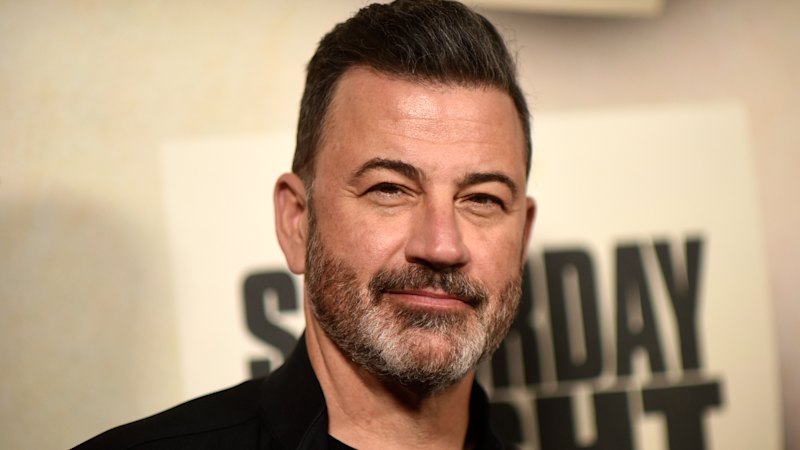
But Colbert’s riposte was firm: “You know what my community values are, buster? Freedom of speech!”
Kimmel’s show was suspended not long after Nexstar Communications Group announced plans to pull the program from its 23 ABC affiliates. Carr called Kimmel’s comments “truly sick” and said his agency had a strong case for holding Kimmel, ABC and network parent Walt Disney Co. accountable for spreading misinformation.
There was no immediate comment from Kimmel, whose contract is up in May 2026. In its statement announcing the suspension, ABC didn’t cite a reason.
Seth Meyers also weighed in during his show on Thursday night, accusing the Trump administration of “pursuing a crackdown on free speech”, then joking “if you’ve ever seen me say anything negative about him, that’s just AI”.
Then Meyers devoted his Closer Look segment to examining the issue.
“It is a privilege and an honour to call Jimmy Kimmel my friend in the same way that it’s a privilege and honour to do this show every night,” he said.
“I wake up every day, I count my blessings that I live in a country that at least purports to value freedom of speech, and we’re gonna keep doing our show the way we’ve always done it: with enthusiasm and integrity.
“We must all stand up for the principles of free expression. There’s a reason free speech is in the very first amendment.”
Veteran host Jon Stewart also used The Daily Show – which he normally hosts only on Mondays – to take aim at the Trump administration over the issue by satirically playing the role of nervous host heaping praise upon the president and the set of the show adorned with decorative gold engravings.
“We have another fun, hilarious administration-compliant show,” the opening voiceover said.
Stewart then referenced Trump’s move to place the National Guard on the streets of Washington DC.
“Coming to you tonight from the real (expletive), the crime-ridden cesspool that is New York City. It is a tremendous disaster like no one’s ever seen before. Someone’s National Guard should invade this place, am I right?” Stewart said.
He then described Trump’s visit to the United Kingdom this week, calling the president “our great father.”
Loading
“Gaze upon him. With a gait even more majestic than that of the royal horses that prance before him,” he said.
Meanwhile, David Letterman, Colbert’s predecessor on The Late Showfeared for the future of the country.
“I feel bad about this, because we all see where see this is going, correct? It’s managed media,” Letterman said during an appearance Thursday at The Atlantic Festival in New York. “It’s no good. It’s silly. It’s ridiculous.”
He added that people shouldn’t be fired just because they don’t “suck up” to what Letterman called “an authoritarian” president.
“To be honest with you all, I don’t know what’s going on, and no one does. But I do know Jimmy Kimmel, and he’s a decent, funny and loving guy, and I hope he comes back,” he said.
Fallon also took a similar approach to Stewart, telling the audience he would keep covering Trump “just like I normally would,” before a voiceover began to drown him out with extravagant praise for the president.
While current President Trump welcomed ABC’s move on social media, former President Barack Obama expressed alarm.
“After years of complaining about cancel culture, the current administration has taken it to a new and dangerous level by routinely threatening regulatory action against media companies unless they muzzle or fire reporters and commentators it doesn’t like,” Obama posted on social media. “This is precisely the kind of government coercion that the First Amendment was designed to prevent — and media companies need to start standing up rather than capitulating to it.”
Comedian Wanda Sykes was also critical.
“I was supposed to go over and have a chat with my friend Jimmy Kimmel on his show, but as you have heard by now, the Jimmy Kimmel Show has been pulled indefinitely,” Sykes posted on social media. “Abruptly, because of complaints from the Trump administration. So let’s see. He didn’t end the Ukraine war or solve Gaza within his first week. But he did end freedom of speech within his first year. Hey, for those of you who pray, now’s the time to do it. Love you Jimmy.”
And comic Mike Birbiglia issued a call to arms to his fellow performers.
Loading
“I’ve spent a lot of time in public & private defending comedians I don’t agree with. If you’re a comedian & you don’t call out the insanity of pulling Kimmel off the air — don’t bother spouting off about free speech anymore,” Birbiglia posted on social media.
Hacks star Jean Smart, who plays a late-night show host in recent seasons of the Emmy Award-winning comedy, said she was “horrified” in a strident social media post.
“I am horrified at the cancellation of Jimmy Kimmel Live. What Jimmy said was FREE speech, not hate speech,” Smart said. “People seem to only want to protect free speech when it suits THEIR agenda. Though I didn’t agree at ALL with Charlie Kirk; his shooting death sickened me; and should have sickened any decent human being. What is happening to our country?”
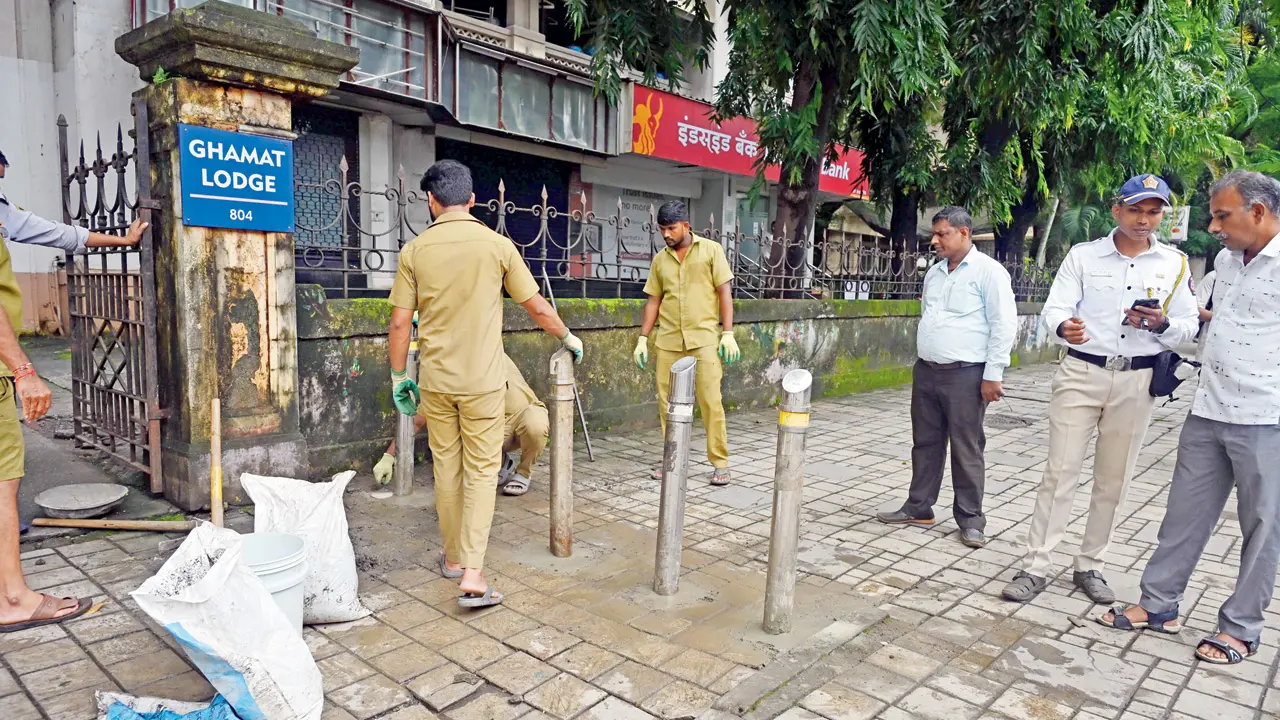
The Mumbai Traffic Police assigned four police personnel to prevent two-wheelers from speeding on footpaths around the Khodadad Circle, popularly called the Dadar TT Circle, on Babasaheb Ambedkar (BA) Road on Thursday. In contrast, 10 traffic police personnel were assigned on duty to manage traffic congestion along the road due to the closure of the Elphinstone bridge.
The traffic police imposed penalties on 180 two-wheeler riders between September 15 (Monday) and September 18, according to information accessed by mid-day from the traffic police’s Matunga division.
The Mumbai Traffic Police had told mid-day, on Wednesday evening, that since the Elphinstone Bridge was being demolished by the civic body, BA Road gets choked not only by traffic heading towards the island city but also by motorists commuting between the east and west. The congestion has led to the problem of bikers venturing onto footpaths to cut short their commute time by a few minutes.
A senior traffic police official told mid-day, “Penalties are being imposed on motorists driving on footpaths and disregarding other traffic rules. It is not that this started only after complaints from residents on Tuesday night. However, it is impossible to monitor the entire stretch of the north and southbound portions. There is a larger issue here — motorists are breaking traffic rules, and this can be solved by design and physical interventions, apart from imposing penalties.
The traffic police wrote to the Brihanmumbai Municipal Corporation on Wednesday evening, seeking that it install zig-zag bollards at entry and exit points of footpaths, to hinder bikers attempting to access pavements for bikers.
Tim McManus covers the Philadelphia Eagles for ESPN. He joined ESPN in 2016 after covering the Eagles for Philadelphia Magazine’s Birds 24/7, a site he helped create, since 2010.
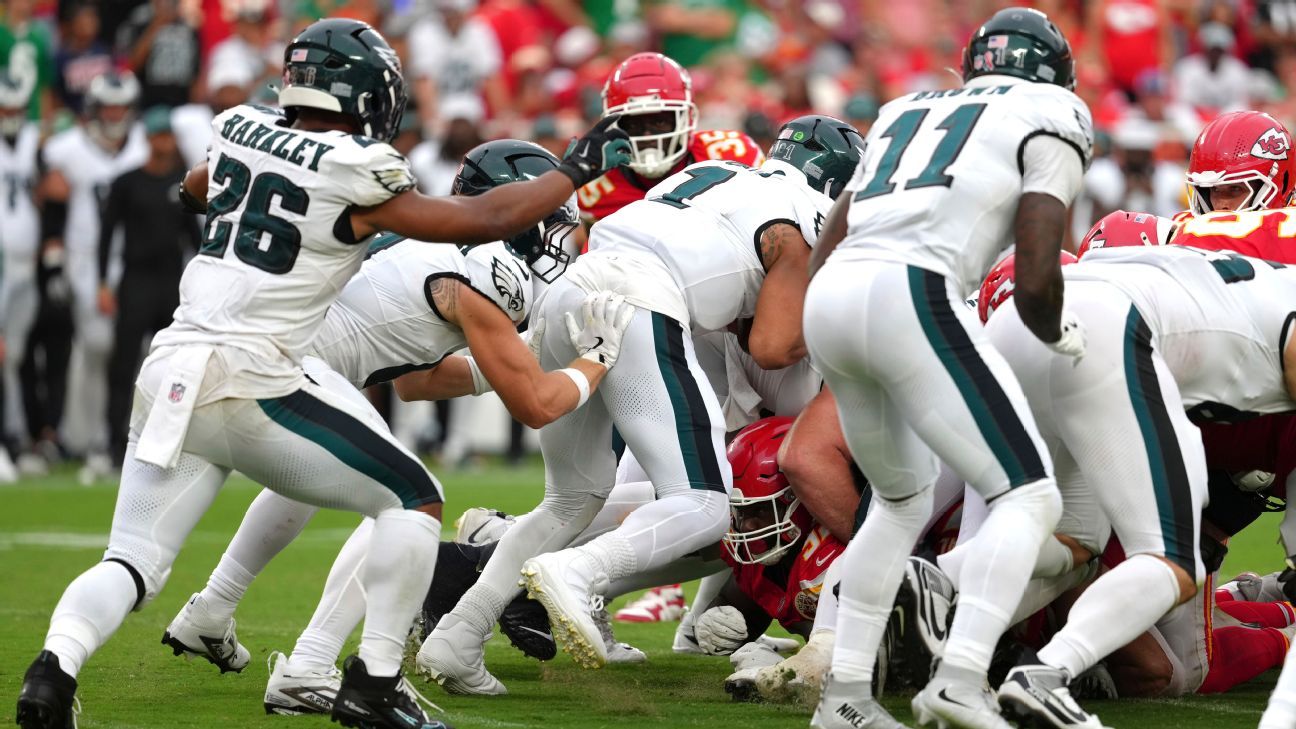
The NFL said the Philadelphia Eagles should have been flagged for at least one false start when they used the tush push against the Kansas City Chiefs on Sunday and instructed officials this week to call the controversial play “tight” going forward.
The message from the league, which was first reported by The Washington Post and later confirmed by ESPN, came in its training tape to officials, which was distributed to all 32 teams Wednesday.
The NFL showed the Eagles running the QB sneak on third-and-short late in the fourth quarter for a first down in an eventual 20-17 win in Kansas City.
“Anytime we have this situation we’re in short yardage, we know we want to make sure that we officiate these plays — the offensive team has to be perfect in every aspect,” NFL vice president of officiating training and development Ramon George said, according to the Post. “We want to officiate it tight. We want to be black and white and be as tight as we can be when we get into this situation where teams are in the bunch position and we have to officiate them being onsides, movement early.
“Prior to the snap, looks like we have movement by the right guard. We also have movement coming across from the defensive side. This is a very hard play to officiate. I get it.”
Chiefs coach Andy Reid said after the game that the Eagles “might have had a couple [QB sneak plays] that they got off a little early on,” putting further scrutiny on the play. Fox analyst Tom Brady also suggested during the broadcast that Eagles offensive linemen were getting off the line of scrimmage before the snap but weren’t penalized.
Philadelphia ran the tush push six times Sunday, gaining four first downs and scoring a touchdown.
“I’ve heard a million different takes on this thing, and it’s driving me nuts,” Eagles center Cam Jurgens said Wednesday. “People saying I’m lining up offsides. I’m holding the ball. I can be on the ball. That doesn’t make any sense to me.
“At the end of the day, we’re not trying to worry about what other teams or people are saying. We’re trying to worry about what we’re doing in here. If the league wants to come down and say something and make an emphasis with the rules, we’re going to take that into account. But it’s the same thing going forward, playing Eagle football.”
The play faced banishment this offseason, but the proposal failed by two votes. The final vote was 22-10 on the proposal, which was submitted by the Green Bay Packers, at the NFL’s annual meeting in Eagan, Minnesota, in May. The proposal needed 24 votes to pass.
The Eagles have converted the play 96.6% of the time in fourth-and-1 scenarios since 2022.
<img src='https://news.cgtn.com/news/2025-09-15/Film-on-Japan-s-infamous-WWII-germ-warfare-unit-to-debut-on-Sept-18-1GGWThTIpZC/img/280a067cef624bf9a0d60e2b86bc7c35/280a067cef624bf9a0d60e2b86bc7c35.jpeg' alt='Poster for a Chinese historical drama titled "731," which revisits the horrific World War II-era human experiments conducted by Japan's notorious germ warfare unit 731. /VCG'
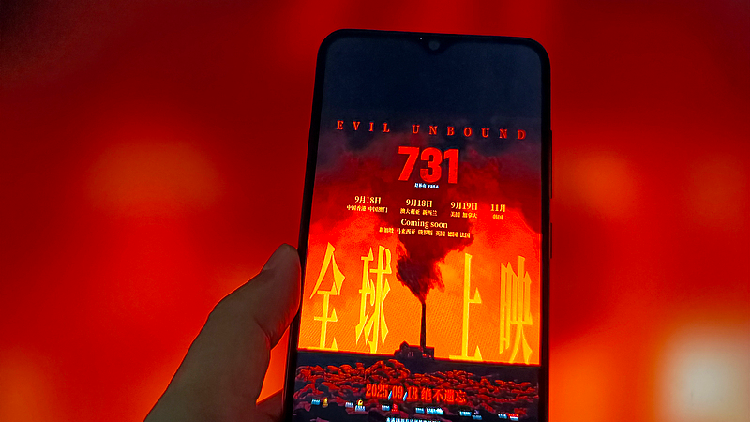
A Chinese historical drama titled “731,” which revisits the horrific World War II-era human experiments conducted by Japan’s notorious germ warfare unit 731, is set to premiere across the globe on September 18.
Directed by Zhao Linshan, the film tells the story of Wang Yongzhang, a local vendor, and others who were imprisoned and lured by false promises of freedom in exchange for cooperation with health checks and disease prevention research.
Instead, they became victims of brutal medical experiments carried out by the occupying Japanese forces, including frostbite testing, gas exposure, and vivisection.
Unit 731, a top-secret biological and chemical warfare research base, was established in Harbin, capital of northeast China’s Heilongjiang Province. It served as the nerve center for Japanese biological warfare in China and Southeast Asia during WWII.
Recently declassified documents from the Public Relations Center of the Russian Federal Security Service reveal that Unit 731 conducted continuous human experiments and attacked hundreds of Chinese people with pathogen-carrying artillery shells to calculate the infection rate and assess the “quality” of the pathogens.
The documents also show the unit’s secret plan to conduct a biological attack on the Soviet Union.
“This is a history that must never be forgotten,” said Jin Chengmin, a historical adviser for the film and head of the Exhibition Hall of Evidences of Crime Committed by Unit 731 of the Japanese Imperial Army.
“The film reveals the inhumane atrocities committed by the invading Japanese army through the eyes of ordinary civilians, while highlighting the unyielding resistance spirit of the Chinese people in the face of despair,” Jin said. “It serves as a powerful reminder to safeguard peace.”
This year marks the 80th anniversary of the victory of the Chinese People’s War of Resistance Against Japanese Aggression and the World Anti-Fascist War.
Its premiere date also coincides with the September 18 Incident in 1931, which marked the beginning of Japan’s 14-year invasion of China.
During the war, China suffered more than 35 million casualties, both military and civilian, while Japanese troops committed countless heinous crimes that have drawn universal condemnation.