Vanity is among the novel’s dominant concerns. Cannon, too, is liable to be accused of taking refuge in her stoicism, vainly trying to show up for others, vainly seeking human connections. In conversation with Charlotte, Cannon, finally invited to talk, realises her own emotional walls. She is reluctant to accept her own anger; it feels implicitly connected to her grandfather’s rage. Yet we sense, too, the possibility her intergenerational trauma need not be hers alone to define and navigate.

Author Lee LaiCredit: Bee Elton
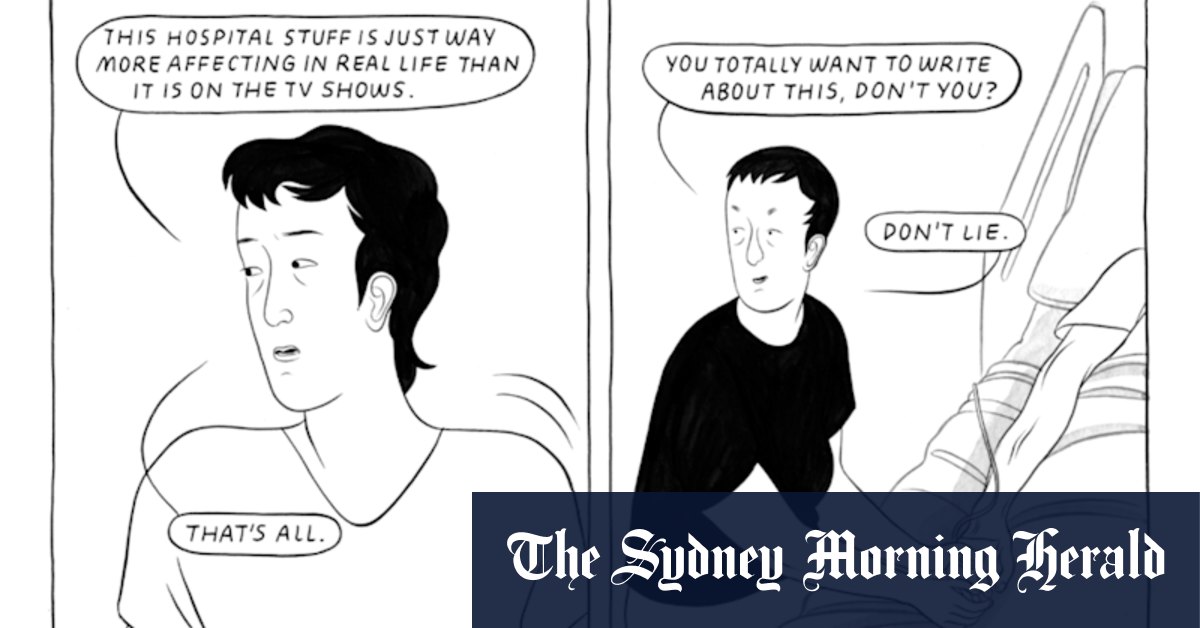
Lee Lai has a distinctive, hand-drawn illustration style, economic and forceful. Her characters are tactile and expressive, fluid and graceful. Cannon’s relationship with her co-worker, Charlotte, is especially well done, their differences energised by emotional juxtaposition (Charlotte, louchely sophisticated and constantly lolling; Cannon, touching or holding various parts of her body, accustomed to keeping her own company, to self-soothing).
Across each panel, Lai makes space for comedy in the framing of her characters, attentive to their expressions and postures and tics. Lai’s faces seem to flicker and ripple, marked by wide-set expressions, distinctively pocked and wrinkled gazes: eyebrows balanced high, curves jauntily bracketing lips and cheekbones.
A pivotal moment in the novel, when Cannon arrives home alone and Trish is with Kam, offers a neat little pile-drive of feeling and released tension. In one lovely sequence, Lai skillfully cuts across time and the interiorities of her characters as Cannon recalls kissing Charlotte to Trish: the panels jump forward, showing the kiss, then Cannon’s blushing reaction, giddy with its memory as she sails through the streets of Montreal on her bike.
Loading
Following the success of Lai’s Fantagraphics debut, the Stella-shortlisted Stone FruitLai returns here with a local publisher. Giramondo’s first foray into graphic novels since releasing Pat Grant’s Blue in 2012, Cannon is comparable to Stone Fruit. Both contain their share of darkness. Crow-like birds periodically greet Cannon – manifestations of latent anger, as well as a form of soothing company.
Yet Cannon’s melancholy, its quiet sense of precise observation, is leavened by a keen sense of humour and intelligence.
This is a thoughtful, deliberative work, and one of the best graphic novels I have read this year.
The Booklist is a weekly newsletter for book lovers from Jason Steger. Get it delivered every Friday.
Leave a Reply