A fire near Kelve Road railway station on the Western Railway’s Dahanu-Virar stretch has reignited concerns over the region’s poor emergency response network, after fire engines failed to reach the spot in time. The incident occurred when smoke was spotted from the engine of train no 59023 Valsad Fast Passenger. Within minutes, flames erupted, forcing the train to halt for passenger safety. While the blaze was eventually contained, the real crisis lay in the response.
Although the fire brigade was alerted promptly, tenders could not reach the site due to narrow, muddy, pothole-ridden roads and lack of access to the tracks. Firefighters were forced to park their vehicles far away and drag long water pipelines to the scene, causing a critical delay. Experts warn such lapses could turn a manageable blaze into a catastrophe.
A train engine that caught fire near Kelve Road station
Commuters say the Kelve Road incident must serve as a wake-up call. They have urged the railway ministry, state government, and local bodies to integrate disaster preparedness into all future rail projects. “This is not the first time. Emergency teams have faced the same hurdles before along the Dahanu-Virar corridor, which carries lakhs of commuters daily. Trains have increased, but emergency infrastructure hasn’t kept pace. The ongoing Dahanu-Virar Quadrupling Project must address this gap, not just add tracks,” said advocate Prathamesh Prabhutendolkar, a member of the Dahanu Vaitarna Pravasi Sevabhavi Sanstha.
“For locals, the railway is not just transport — it is their lifeline. Jobs, education and daily life depend on it. Every minute lost in an emergency costs lives and erodes trust,” he added. A Western Railway official said the fire in the engine was doused swiftly by on-duty staff at Kelve, who showed “exceptional courage.” Deputy Station Superintendent Aditya Kumar, along with pointsmen Som Prakash and Radheshyam, rushed to the spot and, with the train drivers and manager, used eight fire extinguishers to bring the flames under control, aided by local residents.
What can be done
Build parallel service roads for ambulances and fire tenders
Create dedicated emergency access points at stations
Arrange for alternative transport for stranded passengers
Conduct regular mock drills with disaster management agencies
Previously covered UConn and the WNBA Connecticut Sun for the Hartford Courant
Stanford graduate and Baltimore native with further experience at the Dallas Morning News, Seattle Times and Cincinnati Enquirer
ATLANTA – So little went right for the Indiana Fever this season. Star Caitlin Clark was limited to just 13 games due to injury before being ruled out for the year. Prized free agent acquisition DeWanna Bonner left mid-season. Four other players were lost to season-ending injuries, and a fifth has been sidelined to start the playoffs with a concussion.
But in Thursday’s first-round, winner-take-all Game 3 on the road, Indiana finally had things break its way. Despite trailing for over 29 minutes, the No. 6 seed Fever held the No. 3 seed Dream scoreless in the final 2:30 and finished the game on a 7-0 run to shock host Atlanta 87-85 and punch their ticket to their first semifinals since 2015.
Down one with less than 15 seconds on the clock, the Fever’s Aliyah Boston nearly turned it over with the Dream’s Brionna Jones and Jordin Canada in close proximity. Kelsey Mitchell corralled the loose ball as Jones fell to the floor, delaying her ability to recover on defense. The broken play resulted in Odyssey Sims delivering a dime to an open Boston on the block, whose layup with 7.4 seconds remaining gave the Fever their first lead since early in the second period.
On Atlanta’s next possession, Lexie Hull read the inbounds play to jump in front of Canada for the steal. The Fever would only go 1 for 2 from the free-throw line on the ensuing foul shots with 1.2 left, but Jones’ last-ditch heave at buzzer was no good.
“I said before the game started, it was gonna be a gut-check type of game,” said Mitchell, who had 24 points on Thursday and was the leading scorer in every game this series. “We could have easily given up. We played them here in Atlanta. A lot of factors, the fans. And we didn’t.”
Added Natasha Howard: “I can’t put it in words. I’m just speechless right now, just how we fought through this whole game.”
The Fever will face the No. 2 seed Las Vegas Aces, winners of 18 of their last 19 games, in a best-of-five semifinal series beginning Sunday.
A month ago – when Clark’s return was still out of sight and Aari McDonald, Sydney Colson and Sophie Cunningham went down with season-ending injuries — a semifinals appearance for the Fever seemed far-fetched. Even a playoff berth was hardly guaranteed.
Instead, a group without its superstar and with just 10 active players, including four who joined on hardship contracts within the last five weeks, clinched the franchise’s first playoff series win since 2015 – when franchise legend Tamika Catchings was still on the team.
“We work so hard, and I’m just so proud of our group for staying with it,” Hull said. “I mean, it’s just insane that we’re playing in the semifinals. We believed it, but there’s so many people out there that didn’t. And so we’ve got another series.”
Indiana felt like its experience playing through adversity throughout the regular season would come in handy in the playoffs. That proved to be true, with the Fever surviving consecutive elimination games and overcoming a seven-point halftime deficit in Game 3 to go where no one but themselves believed they could with such a shorthanded group.
“This group is just really special,” coach Stephanie White said. “I mean, we say it pretty much ad nauseam, but it’s the resilience, the flexibility, the welcoming, inclusive nature of this team, their selflessness to pull for the we over the me, the ability to let each teammate be who they are and shine at their best and to lift them up… you couple that with the resilience, the toughness, the grit, the fight, the scrappiness, and you always give yourself a chance.”
Atlanta controlled most of the game, thriving off a high-paced first half in which it dominated the paint (40 points) and scored 56 points in all – nearly as many as the team managed in all of Game 2 (60).
Despite trailing, Indiana managed to stay within striking distance the whole time, never letting the Dream go up by more than eight. The Fever tightened up their defense after the break, limiting Atlanta to just 29 points in the final 20 minutes – as many as the Dream scored in the entire second quarter.
The Fever saved their best for last, holding Atlanta to 0 for 3 shooting and forcing three turnovers in the final 2:30 of the game. The Dream finished just 6 for 23 from the 3-point arc, had 14 turnovers and put the Fever on the free-throw line 24 times versus 11 for its side.
“I think we just got stagnant,” Canada said of the second half. “We weren’t moving the ball like we were in the first half… We were taking a lot of bad shots, and we were also rushing as well… and then we had some timely turnovers that they capitalized on.”
Mitchell led the charge scoring-wise, as she’s done all season for the Fever, but was joined by the rest of the starting five in reaching double figures.
“We’ve been punched and punched and punched and punched and punched,” said Brianna Turner, whose defense in her 18 minutes off the bench was crucial. “We perform well with our backs against the wall.”
The last time the Fever were in the semifinals, White was the head coach and Howard -one of their big free agent signees from this offseason – was on the team as a second-year pro.
“I’m just so excited that we’re back here and with this group of young women,” Howard said, “and the job’s not done yet.”
China and the U.S. have reached a basic framework consensus on properly resolving issues related to TikTok through cooperation, reducing investment barriers, and promoting relevant economic and trade cooperation, a senior Chinese official said on Monday in Madrid, Spain.
During the past two days, the Chinese and U.S. delegations engaged in candid, in-depth and constructive discussions on economic and trade issues of mutual concern, including TikTok, said Li Chenggang, China’s international trade representative with the Ministry of Commerce and vice minister of commerce, during a press briefing.
Regarding the TikTok issue, China has always opposed politicization, instrumentalization, and weaponization of technology and economic-trade matters and will never seek to reach any agreement that compromises principles, company interests, or international fairness and justice, Li stated.
China will firmly defend its national interests, the legitimate rights and interests of Chinese companies, and will carry out technology export approvals according to relevant laws and regulations, Li said, adding that the Chinese government also fully respects the will of enterprises and supports them in conducting business negotiations on an equal footing in accordance with market principles.
Wang Jingtao, deputy director of the Cyberspace Administration of China, said at the briefing that both sides reached a basic consensus regarding full respect for the will of businesses as well as market rules on resolving the TikTok issue. This includes approaches such as the entrusted operation of TikTok’s U.S. user data and content security business, as well as the license for use of the algorithm and other intellectual property rights.
The Chinese government will examine and approve relevant matters involving TikTok, such as technology exports and the licensing of intellectual property, in accordance with relevant laws and regulations, Wang added.
He noted that the Chinese government has always firmly safeguarded the legitimate rights and interests of Chinese-funded enterprises and encouraged them to actively explore and develop abroad.
It is hoped that the U.S. can follow the consensus reached by both sides to create an open, fair, just and non-discriminatory economic and trade environment for Chinese companies including TikTok to operate in the U.S.. This, he added, would help promote the stable, healthy and sustainable development of bilateral economic and trade relations, said Wang.
Li said that China agreed to the consensus after concluding, based on its assessment, that it serves the mutual interest of both sides.
He noted that through discussions on issues related to TikTok, the two countries further recognized the significance of a stable and sound China-U.S. economic and trade relationship. Li added that the two sides will continue to maintain close communication, discuss the details of the relevant outcome documents, and go through their respective domestic approval procedures.
It is Frank’s most harrowing experiences that she demands her editor include. But Bow Tie wants to appeal to young readers. He wants her innocence retained.
Loading
Whose truth gets told is a key theme in the play, but it’s presented as a straw-man argument between the well-realised Frank and a caricatured editor.
Playwright Ron Elisha was inspired to write this polemical piece after reading an essay by American Dara Horn that questioned why the Diary of Anne Frank, with its hopeful final line, has been so successful. Horn argued that the diary lets readers off the hook, offering facile forgiveness while bypassing darker complexities.
The Frank presented on stage is far from the poster girl for forgiveness. She’s filled with rage and hate at what she’s experienced.
This is a demanding show in which the versatile Fishman plays all the roles, including Bow Tie and the camp guard. She is a powerful and nuanced Frank, as she evolves from innocent teenager to a woman burning with fury and fighting to tell her unvarnished tale.
Amanda Brooke Lerner’s direction makes shifts of time and place clear, and the most confronting scenes are sensitively handled.
Jacob Battista’s static set evokes the three locations with a sparse wooden bed conjuring the camp. At one side is the Amsterdam attic, on the other the editor’s book-lined office and wooden desk. The location and tone shifts are aided by Finnegan Comte-Harvey’s effective lighting.
This is a bleak, thoughtful piece that comes against a backdrop of rising conflict, not only in the Middle East.
It offers no easy solutions or plea for peace. Yet if we shred the idea of a humanity capable of good, where does that leave us? In a world unable to escape our escalating savagery.
THEATRE TRENT DALTON’S LOVE STORIES Riverside Theatres, September 12 Until September 20 Reviewed by KATE PRENDERGAST ★★½
If you chanced to walk by a Brisbane street corner in 2021, you may have come across Trent Dalton, Walkley-winning journalist and our nation’s current literary golden boy. He’s sitting behind a sky-blue 1960s Olivetti typewriter with a sign reading “sentimental writer collecting love stories”.
With (at least according to the dramatic interpretation) crinkly eyes and a boyish smile, he invites you and every other regular bloke and missus passing by to tell him their own personal love story. Those true-blue anecdotes became Love Stories, the book, which was adapted by Tim McGarry into a cine-theatrical and wildly popular Brisbane Festival and QPAC show. It is playing in Parramatta this month on its five-city tour, directed by Sam Strong.
Live video is a necessary distraction and stimulation.Credit:
It was of course Boy Swallows Universe that catapulted Dalton to literary stardom. Writing in relentless aphorism, with plots that heave with romanticism and old-school Aussie nostalgia, reading Dalton feels like a bad-taste populist parody, as unpleasant as popping candy.
That’s just one opinion, though, and seemingly a minority one. Along with the vulture reviewers, Love Stories’ PR team invited a flock of book influencers to opening night, with a shameless plug of Swallows in the play itself.
Loading
Jason Klarwein is our dramatised Dalton, sitting at that street corner with his Olivetti, ear cocked towards the plangent sound of the common man’s heartstrings. The play is structured as a relentless whirlwind of bite-size profundities and platitudes, with dozens of characters relaying their deepest truths, then disappearing into the skin of another through their respective actor. All stories get a screen subtitle in large, typewriter font.
Live video that captures both on-stage actors and sometimes the audience is a necessary distraction and stimulation. The play would feel very flat without this technical virtuosity, which sometimes deploys overlays, delays and other special effects, and makes much use of the dramatic close-up. There is also some contemporary dance.
Love Stories on stage reproduces the numbing sensation of watching a TikTok feed with the algorithm set to “Big Feelings”. There are stories of lovers who die in car crashes, and lovers who propose in flash mobs; love as a perfect sub/dom pairing, and love as a Rwandan genocide orphan found under a tree.
There’s love as childhood friendship, and love as finding “three good things” to survive each day. That last story, inhabited by Hsin-Ju Ely, was almost moving. And it’s true the cast of 10 makes the most of the material, with standouts in Rashidi Edward, Valerie Bader and Kirk Page.
The show is not without self-awareness. The narrative through-line is character-Dalton’s own love story – which is far past the honeymoon stage. With his wife (Anna McGahan) understandably frustrated at the sacrifices she’s made so her husband can bum around Brisbane’s CBD and listen attentively to everyone but her, she’s put herself in therapy. This central story provides welcome continuity and some sharp rebuttals to the schmaltz.
It all wraps up nicely by the end of course, with a wedding ring remade. What’s not to love? See previous.
THEATRE TRUE WEST Ensemble Theatre, September 12 Until October 11 Reviewed by JOHN SHAND ★★★★½
Simon Maiden’s Lee creates a tension thick with latent violence, a black hole of negative energy. His blank eyes stare with hate and resentment. “You go ahead, like I wasn’t even here,” he tells his brother Austin (Darcy Kent), who’s trying to write a screenplay, but Austin may as well try to imagine a world without sibling rivalry.
In Sam Shepard’s supreme 1980 play True West, Lee, the elder brother, is the daredevil, wastrel and lost soul capable of physical violence and minor criminality. He lobs in on the college-educated, mild-mannered Austin, who’s house-minding – plant-minding, primarily – for their mother while she’s in Alaska. Austin’s using her southern California bungalow as a writer’s retreat to nail down a love story that already has interest from a producer, Saul (James Lugton).
James Lugton, Simon Maiden and Darcy Kent in True West. Credit: Prudence Upton
But hard-drinking Lee has a story of his own, and he gazumps Austin by selling Saul on the idea of a modern-day western that’s one big chase sequence – a metaphor (although he doesn’t know it) for the lifelong game of chase the brothers have been playing.
I can’t imagine three consecutive nights of high-calibre theatre more disparate than the oneiric Orlando (Belvoir St), the bluegrass poignancy of Bright Star (Hayes Theatre) and then True West. If you only see one, make it this. It’s directed by Iain Sinclair, who did the Ensemble’s memorable The Caretaker three years ago, and there are overlaps between Pinter and Shepard. They both like characters who struggle to communicate, and whose frustration breeds aggression.
Shepard consummately structures his play so that when Austin joins Lee on his drinking binge (after Saul favours Lee’s movie idea), the gulf between their characters shrinks until the similarities seem to outweigh the differences. But that only masks underlying resentments.
Maiden and Kent are riveting, walking the seesaw of power imbalance between them. There’s a moment late on when Kent is on his knees, staring up at Maiden, his performance so potent you can see in his eyes the ghost of the hero-worship he once had for his brother.
Lugton’s Saul is the sunbeam of humour blazing through the storm clouds in a wide-collared paisley shirt and perfectly pressed cream trousers (courtesy of designer Simone Romaniuk). Lugton adds matching bonhomie and bravado – at least in Saul’s dealings with Austin. Lee can’t so easily be tamed by smiling promises.
Alas for the brilliant Maiden, a medical emergency forced him from the stage near the end, halting the show for 20 minutes, after which Sinclair read Lee (in costume), and commendably saw the fraternal war to its inevitable conclusion.
This includes the unexpected return of the boys’ mother, played by Vanessa Downing, who probably didn’t have to work too hard to be in a state of shock after what had happened to Maiden, and who completed a stellar cast fulfilling Shepard’s manic vision: a snapshot of an America that can tear itself apart.
MUSIC A Musical Awakening Australian Chamber Orchestra, September 17 Reviewed by PETER McCALLUM ★★★½
The program opened and closed with musical meditations on hymn-like melodies that evoked a search for serenity and transcendence that became the concert’s dominant theme. The first piece, Illuminations,grew out of a soundscape by Erkki Veltheim, which could be heard in the foyers and hall as listeners arrived.
Birdsong, wispy rustling and cavernous wind sounds created the ambience of daybreak and moved seamlessly into a performance by recorder player Genevieve Lacey of Hildegard von Bingen’s 12th-century chant Ave, Generosa. Lacey was quietly accompanied by ACO members playing sustained notes, scurrying figures and fragments of the hymn, which lingered like shapes imprinted on the retina after the object has gone.
Genevieve Lacey and theorbo player Simon Martyn-Ellis.Credit: Charlie Kinross
On the Nature of Daylight by Max Richter continued without a break with theorbo player Simon Martyn-Ellis providing delicate decoration and incisive bass notes to a chorale-like harmonic progression that began on cellos and swelled to the entire string orchestra.
Wiima by Finnish composer Jaakko Kuusisto (whose Cello Concerto the concert’s director Timo-Veikko Valve played to such striking effect earlier this year) broke abruptly from the meditative mood with an initial jabbing, thick chord. This turbulent work juxtaposed surging wind-like textures with penetrating solos and rhapsodically expressive recitatives, closing with an angular rhythmic passage that culminated in a frantic expressive moment.
David Lang’s flute and echo (receiving a world premiere) was, on the surface, exactly what the label said. Lacey played a hauntingly resonant arabesque on one of the lower pitched recorders, which was echoed with some details trimmed by lead violinist Helena Rathbone and then further abridged by the rest of the orchestra.
Lacey retained rounded warmth to the sound as she played progressively higher instruments and the “echoes” fragmented further. When, at the end, she returned to the opening arabesque the surrounding echoes drifted off with their own textures as though cut free.
After interval Melody Eotvos’s Meraki (a Greek word meaning, in her words, when you “put something of yourself” into what you are doing), built up a dark bed of sound from low strings. The piece also had hymn-like moments mixed with passages of tussling rhythmic vigour.
In Imaginary Cities: A Baroque Fantasy , Veltheim created another soundscape against which Lacey led the orchestra in music from the Venetian Baroque by Monteverdi, Vivaldi and Strozzi. It provided an opportunity to hear Lacey chirp with agile virtuosity on a high-pitched recorder in Vivaldi’s Recorder Concerto in C major.
The closing work, Beethoven’s Heiliger Dankgesang (Holy Song of Thanksgiving) from the String Quartet in A minor, Opus 132, took on a sad and solemn significance as a tribute to the passing last Saturday of John Painter.
Beginning his career in the SSO under Eugene Goossens, Painter is fondly remembered and revered by generations of Australian musicians, as cellist, teacher, Director of the NSW State Conservatorium (as it was then called) and the Canberra School of Music and as founder of the ACO fifty years ago.
MUSICAL THEATRE BRIGHT STAR Hayes Theatre, September 11 Until October 5 Reviewed by JOHN SHAND ★★★★
Don’t necessarily judge a musical by its soundtrack. The original Broadway cast recording of Bright Star suggested I was in for a long night. The music and lyrics, by Steve Martin and Edie Brickell, are in a bluegrass/country vein, evoking the setting in North Carolina’s Blue Ridge Mountains. The songs sounded samey, the singing ordinary, and perhaps there was a good reason why nobody had penned a bluegrass musical before.
But that didn’t allow for Steve Martin’s book, with its sharply drawn characters, wit and poignancy – as well as unabashed melodrama – melodrama having kept country ballads simmering since folks first donned cowboy boots.
Bright Star is Sport for Jove’s first musical. Credit: Robert Catto
It also didn’t allow for the Broadway album’s singing being completely outgunned in a production devised, improbably, by leading Shakespeare company, Sport for Jove. Why, I’d wondered, would Sport for Jove lower the bar to hick musical theatre? Now I understand.
Although this is the company’s first musical, music has long been key to its Shakespeare productions, and Bright Star burnishes rather than clouds its reputation. Directors Miranda Middleton and Damien Ryan and musical director Alec Steedman have assembled a 16-person ensemble, almost all of whom act, sing, dance and play. It seemed only three band members didn’t have a character to play, and only one cast member didn’t play an instrument.
That was Hannah McInerney in the pivotal role of Alice Murphy. She has two especially potent songs, Please Don’t Take Him and At Long Last, and they would test the ability of any female singer not to become shrill while squeezing out the show’s emotional marrow. McInerney was superlative – and also acted her socks off as a literary magazine editor whose newborn babe was ripped from her arms 23 years before.
The show zigzags between 1946 and 1923 with an abruptness that initially teases, but we get our heads around it, and learn to trust Martin’s storytelling and invest in his detailed characters. In an ensemble of co-leads, the expert actors included Cameron Bajraktarevic-Hayward, Kaya Byrne, Jack Green, Sean van Doornum, Katrina Retallick and Rupert Reid.
Special mentions must go to Deirdre Khoo, who maximises the minor role of Lucy most entertainingly, and Genevieve Goldman (Margo), who has an ideal voice for the material, and who, upon learning that her love interest, Billy, is being published by Alice’s magazine, performs a little dance of exquisite ecstasy.
The lively choreography by Shannon Burns dovetails with the whip-crack directing, including such joy as a door held up to be knocked on, which, upon being opened, magically becomes a dining table. Designer Isabel Hudson cunningly implied the prevailing rusticity while accommodating 16 performers on the tight stage.
Yes, the melodrama undid certain moments, and the redemptive storyline was predictable, yet all was animated by the music’s high energy under Steedman’s direction and Victoria Falconer’s onstage supervision.
MUSICAL THEATRE HERE YOU COME AGAIN Theatre Royal, September 13 Until October 18 Reviewed by JOYCE MORGAN ★★★
The towering blonde wigs, the eyelashes, the rhinestones. And that’s just the drag queens in the front stalls.
This fanfest was always going to draw Dolly Parton’s most flamboyant admirers.
It’s more tribute show than fully fledged musical, so don’t look for insights into Dolly or even much about the life of the fiercely talented singer/songwriter, Tennessee-born musician.
Tricia Paoluccio delivers an impeccable, sparkly Dolly.Credit: Cameron Grant
Fortunately, the star of this show delivers an impeccable, sparkly Dolly. Tricia Paoluccio captures Dolly’s clear, bright voice, southern drawl and warm-hearted spirit. Whether acting lines or singing from the extensive Parton songbook, Paoluccio channels her idol.
Threaded through this jukebox musical is a slender story about Dolly-tragic Kevin.
Set amid the COVID pandemic, the 40-year-old has moved into his parents’ attic. Kevin’s career is on the skids, and his boyfriend has dumped him. Surrounded by stockpiled toilet rolls (remember that pandemic phenomenon?), Kevin is hoofing into the booze and Cheezels.
“What would Dolly do?” he wonders. And, hey presto, she materialises – a vision in a pink frock and rhinestones. This is Dolly as fairy godmother.
She’s come to set Kevin’s world to rights, help him restore his confidence and impart some homespun wisdom.
What follows is a string of Parton numbers, her big hits – Here You Come Again, Jolene, Islands in the Stream, I Will Always Love You – and some lesser-known. These were well delivered, if not well integrated into the story.
Taking a musical icon and spinning a tale around that figure can work brilliantly, as Titanique showed with its conceit that Celine Dion was on the doomed ship. But to succeed, the writing needs to be sharp and the story fleshed out.
Here, the sections between the music sagged, especially in the first half as Kevin wallowed endlessly in his misery. As Kevin whined and Dolly retorted with more homespun wisdom than a crate of Hallmark greetings cards, by interval the repetition was deflating.
The stronger second half kicked off with Nine to Five, which literally raised the tempo. Dolly’s trademark wit was also more evident, as she poked fun at country and western songs replete with dead dogs and tragic romances.
The Queen of Country, now on the cusp of 80, gave her blessing to this musical, first staged in the US in 2022. Co-created by Paoluccio, Gabriel Barre (who also directs) and Bruce Vilanch, it’s been lightly adapted for an Australian audience by Fiona Harris and Mike McLeish, with Kevin’s attic set in Bendigo.
Dash Kruck was an overwrought Kevin but dialled back the shrillness later in the show. Vocally, he was well-paired with Paoluccio.
The seven-piece band under Andrew Worboys’ musical direction was tight as they moved around and above Paul Wills’ attic set. Several of the musicians also played minor roles.
A happy ending is as assured as a mega-mix. One for the fans, this show is as light and saccharine as candy floss.
High drama unfolded outside the Navi Mumbai Police Commissionerate at CBD-Belapur on Thursday, as the family of missing Constable Somnath Kashinath Fapale, joined by villagers from his native Ahmednagar district, staged a sit-in protest demanding answers about his disappearance.
Fapale, attached to Rabale police station, was deputed for Ganpati visarjan bandobast duty at Vashi police station on September 4. That was 15 days ago. Despite frantic searches, there has been no trace of him, leaving his family anguished and enraged. On Thursday, dozens of relatives — including his wife, parents, uncles and fellow villagers from Lingdev in Akole taluka — marched to the commissionerate. Sitting at the main gate, they declared they would not move until the police gave them clarity.
Constable Somnath Kashinath Fapale. Pic/By Special Arrangement
Vaishali Fapale, wife of the missing constable, said, “It has been 15 days and my husband is still missing. I last spoke to him on September 5 around 7.45 am. He told me he would call me back after charging his phone and also mentioned being under tension and stress. But his phone switched off soon after. I waited all day for his call. When I didn’t hear from him, I began searching, contacted his friends, and even went to his duty post, but found nothing. I registered a missing complaint the same day. Even after 15 days, the police only say they are checking his call records. We are not getting any real updates. The investigation is not serious.”
His uncle, Prabhakar Fapale, said, “Fifteen days have passed, but not a single concrete update. We have given all possible leads to the police, yet the investigation is crawling. We need assurance that Somnath is alive. If we don’t get answers within four days, we will take our protest to Mantralaya and resort to self-immolation.”
Relative Ravi Chaudhary said, “If this is how the system reacts when a policeman goes missing, what hope do ordinary citizens have? We feel ignored. We won’t move an inch until proper action is taken.” Another relative, Balasaheb Kanhavde, said, “We have knocked on every door. Still, there are no answers. We demand the force show the same urgency for one of their own that they expect from common citizens.”
The protest continued for hours, with villagers chanting slogans and demanding that the police commissioner himself respond. Senior officers later intervened, assuring the family that the Crime Branch would now handle the probe and that efforts to trace Fapale were being intensified. Only after this assurance did the relatives call off their agitation.
Mike Clay is a senior writer for fantasy football and the NFL at ESPN. Mike is a member of the FSWA Hall of Fame. His projections power the ESPN Fantasy Football game, and he also appears on “Fantasy Football Now” and the Fantasy Focus Football podcast.
Who will score a touchdown this week? Whether you intend to make an anytime TD bet, are setting a DFS lineup or simply enjoy peering into a crystal ball, we have a prediction for you.
Every week, Mike Clay generates fantasy football projections for every game on the slate, and that includes the probability that a player will take the ball into the end zone. Here are his top 25 predicted scorers for Week 3, along with the implied odds*, as well as the Anytime Touchdown money line offered by ESPN BET at time of publication. For the latest odds on these and all other player props, go toESPN BET.
*Implied odds converts the probability of an outcome projected by Mike Clay into a money line. Look for implied odds that are higher than the money line offered. For example if the implied odds are -150 and the money line is -110, then Clay’s projection system indicates an advantage for the bettor. If the implied odds are +110 but the line offered is -110, the projection system sees a disadvantage to be avoided.
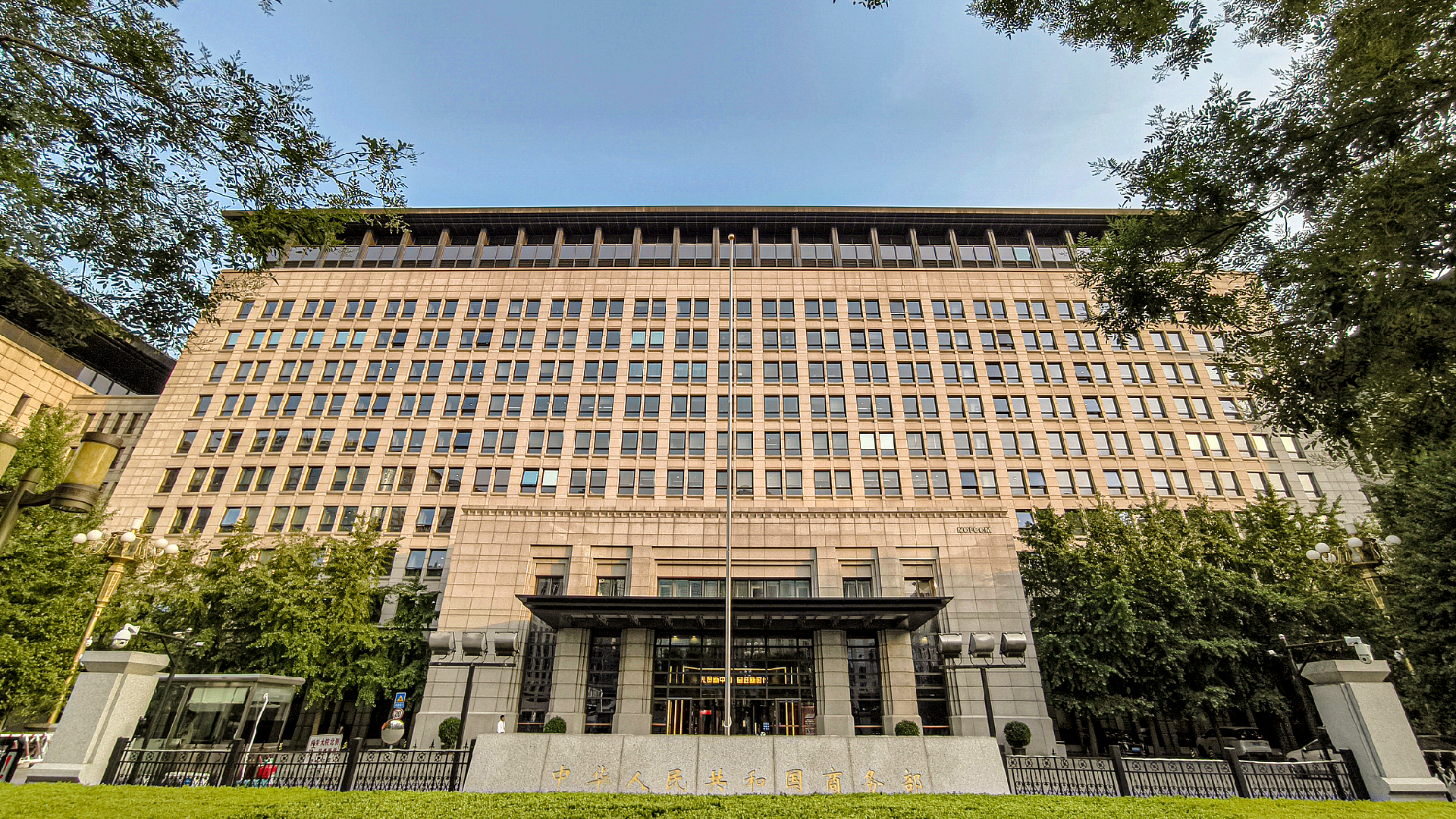
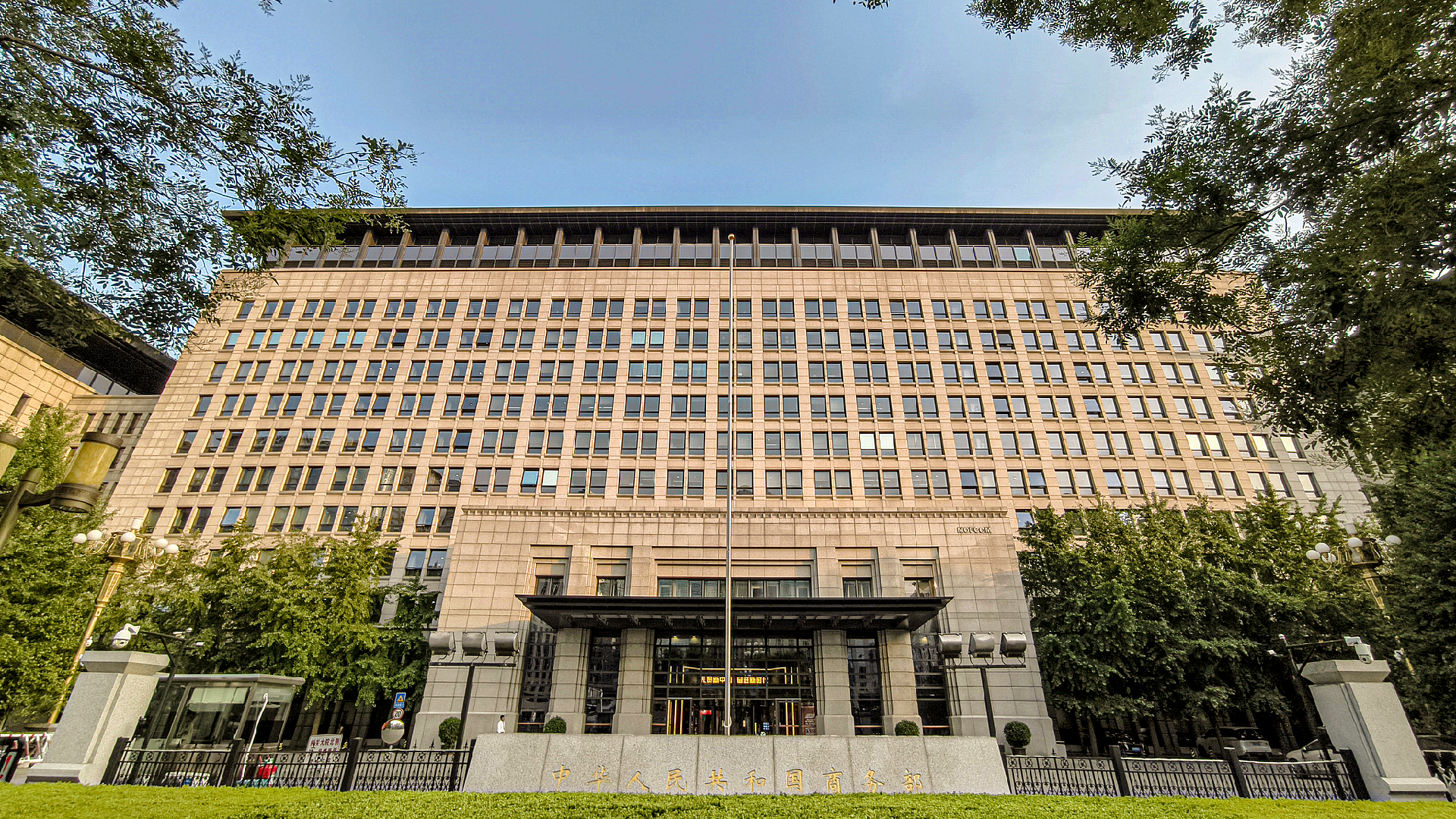
<img src='https://news.cgtn.com/news/2025-09-15/China-opposes-U-S-tariff-demand-on-China-over-Russian-oil-purchase-1GH64DNbu80/img/273a3e9530604ecc80b8211f7c1912cc/273a3e9530604ecc80b8211f7c1912cc.png' alt='China's Ministry of Commerce. /VCG'
China firmly opposes a U.S. demand that Group of Seven (G7) and North Atlantic Treaty Organization (NATO) countries impose tariffs of 50 to 100 percent on China because of the country’s purchase of Russian oil, said a spokesperson for the Ministry of Commerce on Monday.
In response to a media query, the spokesperson stated that China has always opposed trade and economic restrictions against China under the pretext of so-called “Russia-related” issues.
The U.S. attempt to coerce relevant parties into enforcing “secondary tariffs” on China over its purchase of Russian oil is a typical example of unilateral bullying and economic coercion, the spokesperson said.
Such a move seriously violates the consensus reached during a phone call between the two heads of state and could seriously impact global trade and disrupt the stability of industrial and supply chains, the spokesperson added.
China firmly opposes this and will take all necessary measures to protect its legitimate rights and interests if any party harms China’s interests, the spokesperson said.
The spokesperson expressed hope that the United States will act cautiously, collaborate with China in the same direction, and properly resolve trade differences through equal dialogue and consultation.
The spokesperson also called on relevant parties to uphold principles and collaborate with China to protect the international trade system and ensure the stability of global industrial and supply chains.
This week’s books range from fiction set in Japan’s Meiji era and some rock’n’roll fiction to Elizabeth Gilbert’s revealing memoir and the secrets of birdsong.
FICTION PICK OF THE WEEK
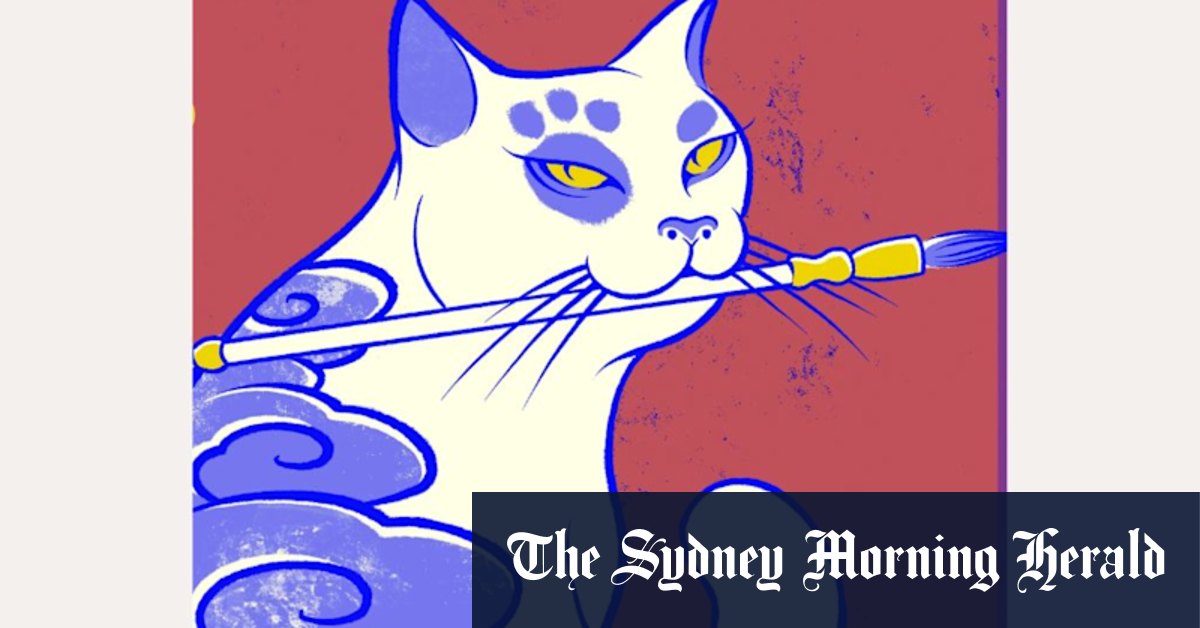
I Am a Cat Natsume Sōseki Vintage Classics, $32.99
Before cats became masters of the meme-verse, before the Andrew Lloyd Webber musical, and before even its source material, T.S. Eliot’s Old Possum’s Book of Practical Cats (1939), there was Natsume Sōseki’s I Am a Cat (1905-6). The satirical classic gives a cat’s eye view of Japanese literati during the late Meiji period. It’s told by an anonymous moggie who arrives in the household of a pseudo-intellectual, Sneaze, and makes catty observations about the professors and scholars and poets who congregate there. The Meiji era coined the Japanese word tsundoku – a term for buying books and allowing them to pile up unread – which should give you some idea of how status-obsessed these bookish humans are. Our cat narrator unsheathes its claws and takes wry swipes at every foible and flaw – from the physical loathing the humans seem to display for themselves and each other, to tensions between Western and Japanese philosophical and cultural traditions. The narrator itself isn’t beyond reproach – the cat assumes it has won celebrity status after randomly photobombing a postcard – though that only adds to the charm of this cynical, surprisingly prescient satire of human failings.
Fireweather Miranda Darling Scribe, $29.99
A sequel to Thunderhead (2024), Miranda Darling’s Fireweather delves into the mind of a woman on the verge of – for want of a better word – madness. Or is it the world that’s gone mad? In the previous book, we got a day in the life of Winona Dalloway, confined by suburban domesticity and motherhood. It fused black comedy with interior mental landscape and found itself in conversation with Virginia Woolf, among other feminist forebears. In Fireweatherwe get drawn into Winona’s mind as her marriage looks like ending in divorce and her children are absent. The world is on fire, literally, with black ash falling from the sky. Internally, Winona splits into multiple voices – dissociating into archetypes such as The Archer, The Nanny and The Poet – as she falls down a mental health rabbit-hole. She thinks she’s sane. Increasingly, mental health professionals disagree. Darling writes feminist fiction infused with wit, intertextuality and a poetic command of language, creating a compelling, intricate internal voice that stands, too, as a critique of institutional misogyny in psychiatry.
Eleanor Jones Is Playing with Fire Amy Doak Penguin, $19.99
The third in Amy Doak’s award-winning Eleanor Jones series of YA mysteries (after Eleanor Jones Is Not a Murderer and Eleanor Jones Can Keep a Secret), immediately demonstrates its appeal, even to the uninitiated. Doak has created a wry and relatable adolescent narrator, at home in a gossipy world of teen crushes and high-school drama yet thrust into solving crimes. At the novel’s opening, she still hasn’t kissed love interest Troy, and no less importantly, there’s an arsonist on the loose in Cooinda, the rural town Eleanor moved to with her mother Min in the first book. Is a spate of car thefts potentially linked to the fires? Eleanor’s warned off investigating by a local cop, but trouble has a way of seeking her out and, in any event, someone must get to the bottom of the mystery before the whole of Cooinda goes up in smoke. Eleanor’s an entertaining teen narrator, her circle of friends is realistically drawn, and the mix of schoolyard romance and puzzle-like detective fiction should, I imagine, make this an addictive series for an early high school audience.
Hot Wax M.L. Rio Wildfire, $32.99
I’ve lost count of how many rock’n’roll novels I’ve read over the years, but almost without exception the genre is expected to tick two boxes. You’ve got to write a love letter to the power of music, on the one hand, and a sharp indictment of the dark side of the industry, on the other. M.L. Rio’s Hot Wax cleaves to the mould, though the narrative has an unexpected twist, and enough depth of character to keep it from feeling completely formulaic. The split narrative follows Suzanne from 10 years old. She’s drawn to her dad’s world of fast cars and electric guitars and accompanies a rock band on a concert tour, where she witnesses fame and infamy intertwining. Years later, Suzanne settles down with a dull husband, Rob, but when her father suddenly dies, she abandons suburbia for the road, determined to find out what happened. Rob isn’t happy about it, planning to track Suzanne down to confront her. M.L. Rio is the author of the BookTok sensation If We Were Villains: this latest should appeal to her fans, even if it seems undistinguished to connoisseurs of rock music fiction.
Slashed Beauties A. Rushby HQ, $32.99
Wax dummies made from 18th-century sex workers – so-called Anatomical Venuses – are imbued with fatal, supernatural powers of vengeance. They come to life and murder any man who dares a lustful glance. (Take that, male gaze!) Such is the conceit of A. Rushby’s Slashed Beauties. In the modern day, antiques dealer Alys is intimately connected to the wax figures. Entrusted with transporting one of them safely, she seeks to prevent uncontrolled magical mayhem from being unleashed. Back in 18th-century London, we follow the fortunes of the three women whose bodies were models for the wax figures. All are involved in the sex industry. Young ingenue Eleanor falls in with Elizabeth, a kept woman who opens a high-class brothel. Entering a world of luxury and corruption alongside fellow newcomer Emily, Eleanor finds herself well-compensated, financially free, but on a dark path she cannot control. Some elements of the world-building are under-realised and the prose is largely pedestrian. If you read only for plot, however, this blend of sisterhood novel and feminist revenge fantasy might just grab you.
NON-FICTION PICK OF THE WEEK
Love’s Labour Stephen Grosz Chatto & Windus, $36.99
When I read psychoanalyst Stephen Grosz’s previous book The Examined LifeI found myself wishing I could bring him my troubles. He is the kind of listener we all want. Attentive, rigorous, non-judgmental. This is not to suggest he presents himself as someone who can “fix” his patients’ problems. Analysis, he stresses in his latest collection of case studies, Love’s Labouris a collaboration. If love’s labour is “the work we must do to see clearly ourselves and our loved ones”, much of that labour is a joint effort carried out in the analyst’s consulting room. Take the story of Matt. His closest relationships don’t feel real because he has been conditioned to repress anger and hate. When he sends Grosz a furious email saying that he doesn’t like him, Grosz knows progress has been made. Then there’s Ravi, who’s convinced his wife is having an affair. He breaks off the analysis, allowing this delusion to ultimately ruin his love for her because he can’t let go the “ecstasy of sanctimony”. Love’s labour, Grosz reminds us in this moving and insightful work, is never done.
All the Way to the River Elizabeth Gilbert Bloomsbury, $34.99
On the surface, everything looked great. Elizabeth Gilbert’s novel The Signature of All Things had shown those who dismissed her as a chick-lit lightweight after the phenomenal success of Eat, Pray, Love that she was a serious, literary writer. But beneath the surface, chaos brewed. Although happily married, Gilbert was in love with her closest friend, Rayya Elias, but couldn’t admit to it. Only when Elias was diagnosed with terminal cancer did their bottled up love explode. “We were ecstatic, phosphorescent, dangerous, brilliant and full of wild courage,” she writes. Until, that is, this wild ride turned into a nightmare as Elias succumbed to her cocaine addiction and Gilbert fuelled it with her addiction to love and sex. Gilbert doesn’t spare herself or Elias while laying bare how abject and wretched they became. But, as a recovering addict, she believes that the truth is what sets you free. The high voltage intensity of this memoir, with its operatic declarations, is not for everyone.
“Sovereign-Tea.” There is so much packed into this poignant play on words. It speaks of the constraints on Aboriginal women in domestic servitude and of their quiet strength. Their job was, as Natalie Harkin so eloquently puts it, to “clean up the colonial mess”. To keep the white settlers’ homes tidy, to look after their children. Even though they themselves might have been taken from their parents or had their children taken from them. The documents Harkin has retrieved from the archives lay bare the chilling and patronising mentality of the colonial bureaucratic mind. A State Lady’s report on one Aboriginal woman in domestic service reads: “You need firm handling. You must realise that you cannot have your own way always in this world”. Set against this exercise of state power are the women’s stories and the memories of their descendants. Stories imbued with sadness but also with resourcefulness and dignity. Stories of artistic and musical talent, of determination and spirit. Here, their labour is made visible, their voices heard.
Swellbeing. Everyone Deserves to Feel Awesome Blake Johnston Hachette, $34.99
“The overpowering pain that someone is feeling when they take their own life doesn’t go away when they die. It just gets passed on to the people who love them.” Blake Johnston knows this because his father ended his own life. And no one saw it coming because his father, like many men, kept his emotions under wraps. Even before his father’s death, Johnston himself was struggling with anxiety. Afterwards, he slowly began to tune into what was going on inside his mind and heart, and take his physical and mental health into his own hands. He set himself goals, rising early, running, swimming in the ocean, doing breath work, having coffee with friends. The goals got bigger until he committed to the world’s longest surf session to raise money for youth mental health. Surfing had been his first love. The ocean had taught him that all is change and that if you embrace it, you thrive. This down-to-earth memoir offers those who are struggling a model for how they can help themselves.
Why Do Birds Sing? Grainne Cleary Allen & Unwin, $34.99
Bird song lifts our spirits, but what is the bird getting out of it? Male birds sing to impress potential female mates with their vocal strength, the complexity of their song and repertoire. While female birdsong was traditionally thought to be rare or aberrant, recent studies show this is not the case, especially in Australia, the evolutionary home of the songbird. Like male songbirds, females sing to defend their territory and to communicate with their mate, whether soliciting copulation or providing for offspring. Young birds learn to sing in the same way humans learn language – by mimicking those around them. And, a bit like teenagers impressed by their friends’ musical taste, they show a “conformist bias”. This informative work is not just about song, however. It looks at wider questions from consciousness and dreaming to whether bird brains can help us better understand human neurology and diseases that afflict it.
Despite the Bombay High Court order prohibiting using trees for commercial or decorative purposes, blatant violations are occurring across the Kalyan-Dombivli Municipal Corporation (KDMC) area. From banners and lighting fixtures to nails and wires hammered into tree trunks, these acts are not only illegal but also environmentally destructive — yet municipal enforcement remains lacklustre.
Rules ignored, roads encroached
On busy roads such as the Phadke Road, hawkers are seen using roadside trees to hang clothes using ropes and nails. On Tilak Road, near Brahman Sabha, a local Chinese food stall has adorned trees with lighting, while nearby hardware shops have followed suit. None of these installations have been authorised by the KDMC.
These activities violate the Maharashtra (Urban Areas) Protection and Preservation of Trees Act and, more critically, defy the high court ruling that bans any damage or modification to public trees, including affixing objects or lighting. However, violations continue unchecked in the absence of routine monitoring or strict penalties.
Municipal departments like the garden department and encroachment department appear reactive rather than proactive — only initiating action when complaints are filed. Mahesh Deshpande from the KDMC’s garden department admitted that while such activities are banned, enforcement is slow. “Often the contact numbers given on the banners are fake. The process involves issuing a notice first, and then imposing a fine — it’s not quick,” he said.
Politics adds to the problem
Rupali Shaiwale from Paryavaran Dakshata Mandal; Surekha Joshi from environmentalist; Activist Anil Mokal from Swachh Dombivli Abhiyan
Political parties further exacerbate the issue. Before and after rallies or events, city streets are filled with banners and posters — many of which remain long after the event is over. These displays are often put up without permission from KDMC and are rarely removed promptly. The selective enforcement, especially when it comes to political actors, reflects a worrying double standard.
Environmentalists sound alarm
Environmental advocates are deeply concerned about the growing trend of using trees for decorative lighting during festivals. Rohit Joshi, an environmentalist from Thane, emphasised, “According to the law, harming a tree in any way is akin to killing it. It is a punishable offence. As per the HC order, local municipal corporations are duty-bound to take strict action against offenders.”
Rohit Joshi, environmentalist
Rupali Shaiwale from Paryavaran Dakshata Mandal, Dombivli, explained the ecological dangers: “Lighting on trees disrupts their growth, damages their bark, and harms the birds and insects that inhabit them. The intense LED lights disturb their natural biological cycles. The biodiversity that depends on these trees is being destroyed in the name of aesthetics.”
Surekha Joshi, another environmentalist, remarked, “As festival season begins, trees are the first to suffer. Nails are hammered into them, lighting is strung along branches, and their natural structure is damaged. Due to concrete layering around the base, water no longer reaches the roots, weakening them. Trees are collapsing during monsoons because of this neglect. The court has issued clear orders, yet authorities continue to turn a blind eye.”
Activist Anil Mokal from Swachh Dombivli Abhiyan and Vivekanand Seva Mandal called the situation “deeply frustrating” and urged municipal officials to stop dragging their feet. “If we’re serious about being a smart city, we must first be a green city,” he said.
Call for urgent, uniform action
Currently, the responsibility for addressing these issues lies with KDMC’s encroachment department, which is expected to escalate such matters to assistant commissioners and department heads. However, delays and lack of coordination have resulted in weak enforcement. Civic activists and citizens alike are calling for stricter penalties, real-time monitoring, and a robust mechanism to deter repeat offenders.
The ACC is closing in on a change to its scheduling format that will require all league teams to play at least 10 games against Power 4 competition, though the number of intraconference games played — eight or nine — remains a sticking point, according to multiple sources.
Athletic directors are scheduled to meet Monday in Charlotte to discuss the details of what will either be a move to a nine-game conference slate with one additional Power 4 game required out of conference or an “8+2” model that will provide more flexibility to schools that already have an annual nonconference rival.
“The ACC committing to go to 10 Power 4 games is a big step forward,” Clemson athletic director Graham Neff said. “It’s indicative of where college football is and leans into emphasizing the importance of strength of schedule and more Power 4 matchups.”
Neff is among the handful of ADs concerned that a nine-game conference slate would be problematic in limiting schools’ ability to play marquee nonconference games as Clemson did this season against LSU in Week 1.
The Tigers play South Carolina annually and, beginning in 2027, will also have a yearly game against Notre Dame.
A straw poll of 13 of the ACC’s 17 athletic directors showed nine supported or were amenable to the nine-game slate, while Clemson and Florida State are among the others with concerns about the impact on nonconference scheduling.
The SEC announced last month that it would move from an eight-game to a nine-game conference slate — a decision that has spurred the ACC’s interest in adjusting its scheduling model, too.
Multiple sources said ACC commissioner Jim Phillips wants to see the conference play nine league games annually and require each school to schedule one out-of-conference game against another Power 4 school, essentially matching the SEC’s new strategy. ACC schools are already supposed to have at least one Power 4 nonconference game each year, but that rule has not been enforced, and several programs have avoided playing a more difficult schedule. Sources told ESPN that the current conversations have reached a consensus that 10 Power 4 games must be an enforced minimum moving forward.
One administrator said it seems inevitable the league is going to go to nine league games. Duke coach Manny Diaz agreed.
“I think it’d be awfully strange to be the only conference not at nine conference games,” Diaz said. “Usually, when you’re the only one doing something, it’s either really good or really bad. It just feels like you’d want continuity in what everybody does in college sports.”
The SEC’s move coincided with the College Football Playoff committee’s revised guidelines that emphasize strength of opponent. SEC schools are also expected to see an increase in revenue from its TV partner, ESPN, for adding the additional conference game.
ACC ADs were briefed on the various plans during a call Wednesday, though several said there remains little understanding of how potential changes would be accepted by ESPN or considered among the CFP committee. Indeed, as Miami AD Dan Radakovich noted, the ideal formula for a 12-team playoff vs. an expanded version might not be the same, but the ACC will need to decide its scheduling fate before knowing what the future postseason might look like.
“Hopefully, Jim [Phillips] will give us some insight into that when we get together Monday and help set the table that, hey, nine is going to be really important for us to keep a very good seat at the table as it relates to the other CFP commissioners and the Power 4 conferences,” Radakovich said. “It all depends on how big the CFP gets. That’s another driving factor we won’t know. We’re going to have to make this decision without that knowledge and try to project it the best way we can.”
No additional revenue is expected to come from ESPN if a change is made. The ACC also changed its revenue-distribution model starting in 2025, awarding a higher percentage of revenue to schools based on TV ratings.
“It’s important we continue to be strategic in providing value to our media partner, ESPN,” Neff said. “And with how the ACC has adapted our financial distribution model, that has direct school revenue implications unlike any other conference.”
The ACC has wrestled with how many league games it should play for more than a decade. In 2012, the ACC agreed to play nine, but then it decided to stay at eight after adding Syracuse and Pittsburgh and coming to a scheduling agreement with Notre Dame the following year. The intrastate nonconference rivalry games that Clemson, Florida State, Georgia Tech and Louisville play annually against their SEC rivals have always been a sticking point in any of these discussions.
For those four teams, their rivalry games coupled with a nine-game conference slate would provide a full inventory of 10 Power 4 matchups — with more in years in which those schools play Notre Dame as part of the league’s agreement that requires five games per year against the Irish. That leaves little room for marquee matchups such as Clemson-LSU or Florida State-Alabama, two games that did monster ratings in Week 1 of this season, each drawing more than 10 million viewers.
But future marquee nonconference matchups like those could disappear once the ACC moves to a nine-game conference slate, Neff said, which could diminish the overall product and inhibit revenue opportunities, given the ACC’s new distribution model that provides more money to schools with better TV ratings.
Radakovich noted that games like this week’s showdown with Florida are unlikely to be played moving forward due to the constraints of a larger conference schedule, but he said he will continue to have conversations with Florida AD Scott Stricklin.
“It’s going to be a real tough sell because Florida has their nine SEC games and their rivalry game with FSU,” Radakovich said. “Scott and I will have some chats to see if it can happen but it’s going to be some tough sledding.”
Louisville AD Josh Heird said his school would still schedule top nonconference competition, even if that means an 11th Power 4 game. The Cardinals have future games scheduled against Georgia in 2026 and 2027 and Texas A&M in 2028 and 2029.
“Play good teams,” Heird said. “We’ll play Kentucky every year, and we’ll have Notre Dame every once in a while. And we absolutely want to still play the home-and-homes with Georgia and Texas A&M. I think the kids want to play those games, too.”
Several ADs expressed concern, however, that series like Louisville’s with Georgia and Texas A&M would disappear regardless, as the SEC bows out of such matchups now that its teams will play nine league games. Others suggested the SEC and Big Ten — the two leagues with the most financial clout — could work together for nonconference scheduling, leaving the ACC and Big 12 with few options to fill out their slates, particularly if the ACC has two Power 4 nonconference games required.
“You’re not guaranteed 10,” one AD in favor of a 9+1 model said. “That’s the issue. Who’s to say the other Power 4 leagues want to schedule ACC schools?”
One alternative could be for ACC teams to schedule nonconference games against each other, as NC State and Virginia did in Week 2. Several ADs expressed skepticism about that plan, however, suggesting it would be extremely confusing for fans to understand which ACC vs. ACC matchups counted in the league standings and which did not.
Regardless, the ACC will have to figure out a way around a more basic problem of math. With 17 football-playing members, there’s no way for all schools to play nine conference games.
One initial plan involved games vs. Notre Dame — an ACC member in all sports except football — to count as conference games. Multiple ADs told ESPN that plan has been shelved for the time being, likely in favor of an imbalanced model in which at least one team will play just eight conference games while the rest play nine.
Monday’s meetings in Charlotte are expected to move the league closer to a final decision, but several sources said they do not expect an official vote to happen for a few weeks and are similarly dubious a change will take effect for the 2026 season.
“Let’s look to try to set our course,” Radakovich said. “The discussions will happen Monday, but decisions will hopefully happen shortly thereafter. Hopefully, we’ll come out of that with a consensus that leads the ACC to a final conclusion.”